
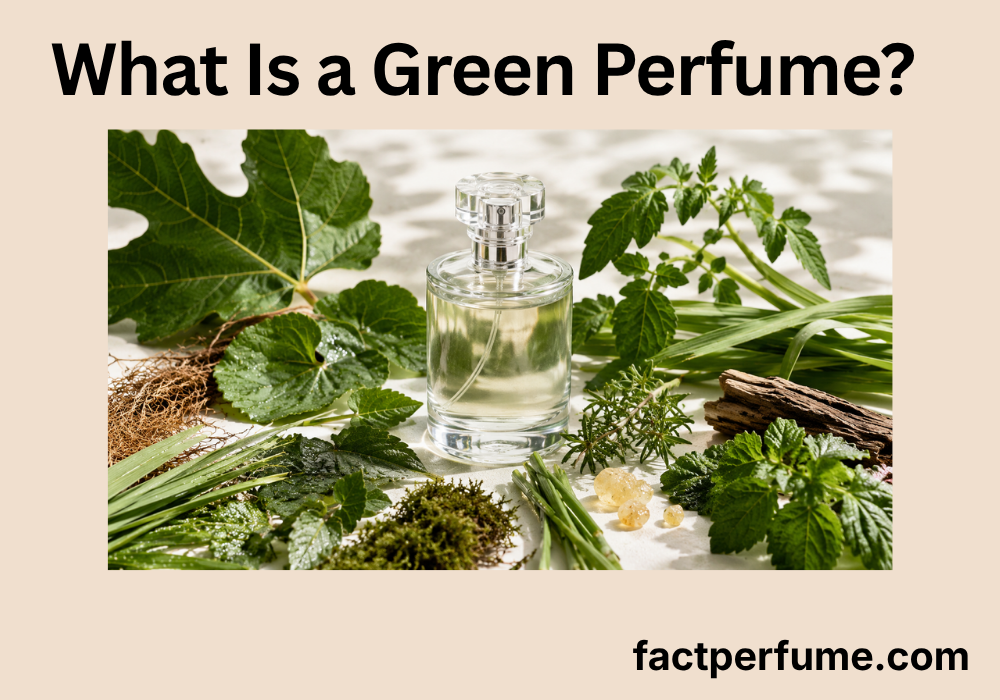
What Is a Green Perfume?
A green perfume is a fragrance in which leafy, grassy, sappy, herbal, bitter, vegetal, dewy, or related verdant effects help define its dominant olfactory identity. It may remind you of crushed leaves, freshly cut grass, snapped stems, plant sap, herbs, or damp foliage rather than simply smelling “fresh.”
The word green describes the perfume’s smell, not how its ingredients were sourced or manufactured. Green fragrances can also overlap with floral, woody, aromatic, citrus, aquatic, chypre, and other styles. What matters is whether the verdant character plays an important role in the fragrance’s overall identity.
Fragrance Note: “Green” describes how a fragrance smells. It does not by itself indicate whether the formula is natural, synthetic, sustainable, eco-conscious, clean, or suitable for a particular skin type.
What Does a Green Perfume Smell Like?
Green perfumes commonly evoke plant-associated freshness through impressions of leaves, grass, stems, sap, herbs, foliage, or bitter vegetation.
Imagine rubbing a fresh leaf between your fingers, snapping a green stem, walking through freshly cut grass, or smelling herbs growing after rain. These experiences give useful references for understanding the green scent profile.
However, green perfume does not have one fixed smell.
One green fragrance might feel sharply grassy and bitter. Another may be soft, watery, and dewy. Others can appear herbal, floral-green, mossy, resinous, woody-green, or distinctly vegetal.
Some green effects feel highly realistic, almost like smelling crushed vegetation. Others are abstract interpretations that create the idea of greenness without reproducing one recognizable plant.
A green note is an individual material or scent effect that contributes green character.
A green accord is a combination of materials arranged to create a coherent green impression.
A green perfume is the complete fragrance composition in which those green effects materially influence the dominant scent identity.
This distinction matters because finding one green note in a fragrance does not automatically make the entire perfume green.
Classification also depends on the system being used. Wheel, for example, includes Green within its fragrance-family system, while other historical classification systems have placed green under floral, chypre, or other categories. It is therefore more accurate to treat “green” as a family, subfamily, facet, or stylistic descriptor depending on the taxonomy rather than claiming that every classification system uses it identically.
Green perfume identity comes from dominant verdant cues such as leaves, grass, stems, sap, herbs, damp foliage, bitterness, and related botanical effects.
Why Does “Green Perfume” Not Mean Eco-Friendly or Clean Fragrance?
“Green perfume” describes scent character, whereas natural, sustainable, eco-conscious, and clean fragrance refer to separate ingredient, sourcing, formulation, or marketing concepts.
A perfume can therefore be:
- green-smelling without being marketed as sustainable;
- sustainability-positioned without smelling green;
- both green-smelling and sustainability-positioned;
- neither.
The confusion comes from the fact that the word green has different meanings in different contexts.
In perfumery, saying that a fragrance is green normally refers to its olfactory character—the scent that reaches your nose.
It does not tell you whether the ingredients came from plants, whether synthetic aroma materials were used, whether the packaging is environmentally responsible, or how the raw materials were sourced.
Likewise, clean fragrance should not be treated as another name for green perfume. “Clean” is used in varying formulation and marketing contexts rather than representing one universal olfactory family.
A fragrance built primarily from synthetic materials can smell intensely green. A perfume made with many botanical materials might smell floral, woody, spicy, citrusy, or resinous instead.
Ingredient origin and scent classification answer different questions.
Which Materials Give Perfumes Their Green Character?
Perfumers create green character with natural materials, synthetic aroma materials, and constructed accords that evoke leafy, grassy, bitter, watery, herbal, resinous, or botanical effects.
There is no single required “green ingredient.”
Instead, perfumers can reach green territory through different materials and combinations depending on the effect they want.
A composition might emphasize resinous bitterness, freshly crushed leaves, wet foliage, aromatic herbs, grassy stems, mossy woods, or a more abstract vegetal freshness.
It is also important to distinguish a material from an effect. A perfume that smells like tomato leaf, fig leaf, or violet leaf does not necessarily contain a literal extract of that plant part. Perfumers can construct recognizable impressions through accords and aroma materials.
A deeper look at Notes helps show how widely green character can vary.
How Does Galbanum Create Bitter and Resinous Greenness?
Galbanum contributes an intense bitter, resinous, sharply green character that differs from simple cut-grass freshness.
Galbanum has a long association with green-style perfumery because it provides something more severe and structured than a soft leafy smell.
Technical material information describes galbanum materials as having a green and balsamic odor, while Michael Edwards’ Fragrances of the World specifically associates the classic green fragrance style with the impact of resinous galbanum.
Its greenness can suggest bitter vegetation, crushed stems, resin, and an almost austere botanical sharpness.
That does not mean every green perfume contains galbanum.
Nor should galbanum be treated as the definition of green perfume. It is one influential way of producing green character among many possible approaches.
How Do Violet-Leaf Effects Create Dewy or Watery Greenness?
Violet-leaf effects can create a cool, watery, leafy, cucumber-like, or slightly metallic form of greenness.
This profile shows why green fragrances should not always be imagined as dry grass or bitter vegetation.
Violet leaf is commonly described as distinctly greener than the violet flower, with cool cucumber-like, metallic, fresh, and watery characteristics.
In a perfume, this type of effect can make greenness feel damp rather than dry, transparent rather than dense, or dewy rather than sharply grassy.
The wording violet-leaf effect is useful when discussing the smell of a finished perfume because recognizing that character does not prove that literal violet-leaf material appears in the formula.
The sensory impression and the ingredient list are not the same thing.
How Do Fig-Leaf and Tomato-Leaf Effects Create Botanical Greenness?
Fig-leaf and tomato-leaf effects create distinctive botanical impressions ranging from milky or leafy greenness to sharp herbal and vegetal character.
A fig-leaf effect can combine green freshness with a softer, rounder or slightly milky quality. Instead of suggesting only cut grass, it may evoke broad leaves, pale sap, or a smooth botanical texture.
Tomato-leaf effects usually move in a different direction.
They can feel sharper, more herbal, aromatic, sappy, or distinctly vegetal—closer to rubbing a tomato plant’s stem or leaf than smelling the ripe fruit.
These descriptions refer to olfactory effects. A perfume described as “fig leaf” or “tomato leaf” should not automatically be assumed to contain a literal extract from those leaves.
Perfumery can reproduce or reinterpret botanical impressions through carefully constructed accords.
How Does Cis-3-Hexen-1-ol Create a Fresh-Cut Green Effect?
Cis-3-hexen-1-ol is strongly associated with fresh-cut grass, crushed leaves, and green stems, making it a useful reference for vivid leafy greenness.
It is commonly known as leaf alcohol.
PubChem identifies cis-3-hexen-1-ol, or (Z)-hex-3-en-1-ol, as leaf alcohol and notes that it is emitted by green plants following mechanical damage. It also has a documented role as a fragrance material.
That connection helps explain why the smell of broken stems and freshly damaged vegetation is such a useful sensory reference when discussing vivid green fragrance effects.
Its natural occurrence should not be interpreted as making it inherently better, safer, or more authentic than synthetic fragrance materials.
Likewise, its importance as a green reference does not mean every grassy or leafy perfume depends on this single molecule.
How Do Synthetic Aroma Materials Expand Green Effects?
Synthetic aroma materials expand green perfumery by allowing perfumers to create realistic, abstract, intensified, or carefully controlled verdant effects.
Synthetic does not mean “fake-smelling.”
A perfumer may use synthetic materials to suggest leaves, wet stems, grass, cucumber-like freshness, herbs, vegetation, or effects that do not correspond neatly to any single natural ingredient.
Natural materials can also contribute beautiful and complex green characteristics.
The useful distinction is therefore not:
natural = realistic
and:
synthetic = artificial
Both routes can contribute to realistic or abstract fragrance effects depending on how they are used in the composition.
Origin alone does not determine whether something smells attractive, naturalistic, refined, modern, or recognizably green.
Readers interested in how these materials behave through the full wearing experience can separately explore Longevity.
Green perfumery can use natural materials, synthetic aroma materials, and constructed accords to create distinct leafy, bitter, watery, herbal, resinous, or vegetal effects.
How Do Green Fragrances Differ From Citrus and Aquatic Scents?
Green, citrus, and aquatic fragrances may all feel fresh, but green perfumes emphasize verdant or plant-associated effects, citrus perfumes emphasize peel and zest, and aquatic perfumes emphasize watery, airy, marine, or ozonic effects.
The three can overlap, which is why the distinction should be based on the perfume’s dominant sensory impression rather than assuming that one ingredient automatically determines the family.
Michael Edwards’ fragrance system, for example, describes Green through effects such as fresh-cut grass and violet leaves, Citrus through citrus zest, and Water through sea-breeze, waterfall, and ozonic impressions.
Green vs. Citrus
Green freshness tends to evoke:
- leaves;
- stems;
- grass;
- sap;
- herbs;
- crushed vegetation;
- vegetal bitterness.
Citrus freshness tends to emphasize:
- peel;
- zest;
- tart fruit;
- sparkling citrus brightness;
- lemon, bergamot, mandarin, orange, or grapefruit-like effects.
The easiest distinction is often to ask where the freshness seems to come from.
Does it remind you primarily of crushed plants?
That points toward green territory.
Does it remind you primarily of bright citrus peel being squeezed or grated?
That points toward citrus.
A fragrance can, of course, contain both. Citrus can brighten a green composition, while green notes can give citrus perfume a leafy or herbal edge.
Green vs. Aquatic
Green freshness is usually anchored to the idea of vegetation:
- leaves;
- grass;
- herbs;
- stems;
- sap;
- watery foliage.
Aquatic freshness tends to suggest atmosphere or water:
- watery transparency;
- humid air;
- marine impressions;
- ozonic freshness;
- mineral facets;
- airy freshness;
- melon-like watery effects.
An aquatic fragrance does not have to smell literally like the ocean, and aquatic perfumery should not be reduced to one molecule or one marine note.
Likewise, a dewy green perfume may have noticeable wateriness while remaining green because leafy vegetation—not abstract water or air—forms its main sensory idea.
Fresh Fragrance Distinction Table
| ProfileDominant Sensory CueRepresentative EffectsRecognition Clue | |||
|---|---|---|---|
| Green | Leaves, stems, grass, sap, herbs | Galbanum, leafy accords, grassy and botanical effects | Verdant, grassy, leafy, bitter, herbal, or vegetal |
| Citrus | Peel, zest, tart citrus fruit | Bergamot, lemon, mandarin, grapefruit | Bright, sparkling, peel-like, tart |
| Aquatic | Water, air, marine or ozonic freshness | Watery, marine, mineral, transparent and ozonic accords | Atmospheric or watery rather than primarily plant-like |
These are dominant sensory cues rather than rigid ingredient rules. A modern perfume may combine two or even all three profiles.
Green freshness is plant-associated, Citrus freshness is peel- and zest-led, and aquatic freshness is more watery, airy, marine, mineral, or ozonic.
How Do Common Green Perfume Styles Differ?
Green perfume can appear in several common stylistic directions, including floral-green, green-chypre, soft dewy, and vivid leafy or grassy forms.
These are useful ways of describing differences within green perfumery, not a claim that every fragrance taxonomy recognizes four official green subfamilies.
A single perfume can also combine several of these directions.
What Creates a Green Floral Style?
A green floral style combines leafy, stemmy, bitter, or dewy green effects with a clearly floral structure.
Instead of presenting flowers as smooth petals alone, green effects can make the composition suggest the entire plant: blossoms with leaves, stems, moist foliage, or garden air around them.
Hyacinth-like effects, lily-of-the-valley-style accords, and other leafy floral contrasts can contribute to this impression.
Depending on the composition, the result may feel fresh, lush, garden-like, or distinctly floral-green.
Those descriptions are sensory interpretations rather than fixed characteristics that every green floral perfume must possess.
What Creates a Green Chypre Style?
A green chypre combines pronounced green effects with a drier, mossy, or chypre-like structural character.
Green chypres can use bitter-green facets, galbanum-like effects, mossy elements, and woods to create a more structured interpretation of greenness.
The overall impression may feel drier and more austere than a soft leafy or dewy green fragrance.
The important distinction is that green chypre represents one particular expression of green fragrance territory.
It does not define green perfume as a whole.
Readers who want the narrower structural distinction can explore Chypre.
What Creates a Soft or Dewy Green Style?
Soft or dewy green styles emphasize transparent, watery, leafy, floral, or musky effects instead of strongly bitter or aggressively grassy character.
Violet-leaf effects can work especially well in this direction because they can suggest wet greenery, cucumber-like freshness, and cool leaves.
Light floral effects, musks, tea-like facets, or transparent structures may soften the edges further.
The result can be perceived as airy, gentle, or dewy rather than aggressively vegetal.
This demonstrates an important point: green does not automatically mean harsh or bitter.
The same general scent territory can range from intense crushed vegetation to delicate moisture-covered leaves.
What Creates a Leafy or Grassy Green Style?
Leafy or grassy green styles emphasize cut vegetation, leaves, stems, herbs, and vivid fresh botanical effects.
This is probably the form of green perfume that most closely matches the immediate mental image many people have when they hear the term.
Leaf-alcohol effects, grassy accords, fresh stems, and herbs can make the composition feel crisp, vivid, botanical, or freshly cut.
Some fragrances pursue a highly naturalistic interpretation.
Others exaggerate the green sensation into something cleaner, sharper, more abstract, or more stylized than the smell of actual vegetation.
Green Fougère Boundary
A green fougère may contain prominent verdant effects, but its broader aromatic structure makes it a separate concept from green perfume as a whole.
The presence of herbs, foliage, or green notes does not make every fougère a green perfume, just as the presence of one green note does not determine the identity of an entire composition.
Green Style Comparison Framework
| StyleDominant CharacterCommon Supporting EffectsTypical Sensory Impression | |||
|---|---|---|---|
| Green Floral | Leafy + floral | Hyacinth-like, muguet-style and floral accords | Fresh, garden-like, floral-green |
| Green Chypre | Bitter + dry/mossy | Galbanum, mossy effects, woods | Dry, structured, bitter-green |
| Soft / Dewy Green | Watery + transparent | Violet-leaf effects, florals, musks | Airy, soft, dewy |
| Leafy / Grassy Green | Fresh vegetation | Leaf-alcohol effects, herbs, stems | Crisp, vivid, fresh-cut |
This framework is a practical way to compare common green directions. It is not a universal official fragrance taxonomy.
How Can You Identify a Green Perfume When You Smell It?
Identify a green perfume by asking whether leafy, grassy, sappy, herbal, bitter, or related verdant effects form a central part of the fragrance’s identity rather than appearing only as a minor accent.
You can make that decision through five simple steps.
Step 1 — Identify the Freshness Source
First ask what the perfume’s freshness reminds you of.
Does it primarily suggest:
- leaves;
- stems;
- grass;
- herbs;
- sap;
- crushed foliage;
- bitter vegetation?
If so, the perfume is moving toward green territory.
Do not stop at the word fresh. Citrus and aquatic fragrances can also smell fresh.
The source of the freshness matters.
Step 2 — Separate Green From Citrus
Ask whether the dominant freshness is:
verdant and plant-associated
or:
peel-like, tart, and citrus-fruit-driven.
Imagine the difference between crushing a leaf and squeezing lemon peel.
Both can feel bright and refreshing, but the sensory references are different.
If leaves, grass, herbs, stems, or vegetation dominate, the fragrance is more likely to be green.
Step 3 — Separate Green From Aquatic
Next ask whether the perfume primarily feels:
leafy, vegetal, grassy, or herbal
or:
watery, airy, marine, mineral, or ozonic.
A green perfume can certainly be wet or dewy.
The important question is whether that wateriness belongs to the idea of wet vegetation or whether water and atmosphere themselves form the dominant impression.
Step 4 — Identify the Green Direction
Once you recognize the green character, describe what type of greenness is most noticeable.
Is it mainly:
- floral-green;
- mossy;
- bitter-green;
- dewy;
- herbal;
- grassy;
- woody-green?
This makes “green” more useful than treating every verdant perfume as if it smelled the same.
Step 5 — Determine Dominance
Finally, decide how important the green character is to the complete fragrance.
A citrus perfume might contain a leafy accent.
A floral perfume might use green notes to make its flowers feel freshly cut.
A woody fragrance may include herbal or grassy freshness.
Those details do not automatically change the entire fragrance into a green perfume.
For the green classification to be useful, the verdant effect should materially shape the perfume’s overall scent identity.
Green Perfume Identification Checklist
Use these questions when smelling a fragrance:
You do not need every answer to describe exactly the same smell.
The goal is to identify the fragrance’s dominant sensory idea.
Frequently Asked Questions
A perfume is usefully described as green when leafy, grassy, sappy, herbal, bitter, vegetal, dewy, or related verdant effects materially shape its dominant scent identity rather than appearing only as a minor accent.
No. Green describes olfactory character. It does not by itself indicate whether a formula is natural, synthetic, sustainable, eco-conscious, clean, or suited to a particular skin type.
Yes. Synthetic aroma materials can create realistic, abstract, intensified, or carefully controlled leafy, grassy, watery, herbal, stem-like, or vegetal effects. Origin alone does not determine realism.
Green freshness is primarily plant-associated, such as leaves, grass, stems, herbs, sap, and vegetation. Citrus freshness is peel- and zest-led, while aquatic freshness is more watery, airy, marine, mineral, or ozonic.
No. A fragrance can contain a leafy or green accent without being green overall. The verdant effect should materially shape the complete fragrance identity for the classification to be useful.
Conclusion
The simplest way to recognize a green perfume is to determine whether a verdant or plant-associated scent idea forms the fragrance’s dominant identity rather than citrus, aquatic, floral, woody, or another primary effect.
That greenness can be leafy, grassy, bitter, dewy, herbal, mossy, floral-green, woody-green, or somewhere between several of these directions.
It also does not depend on one mandatory ingredient or on whether the formula is natural, synthetic, sustainable, or marketed as clean.
The final recognition question is simple:
Is verdant, leafy, grassy, herbal, sappy, bitter, or related plant-associated character one of the fragrance’s dominant sensory ideas?
If yes, the perfume can reasonably sit within green fragrance territory.