
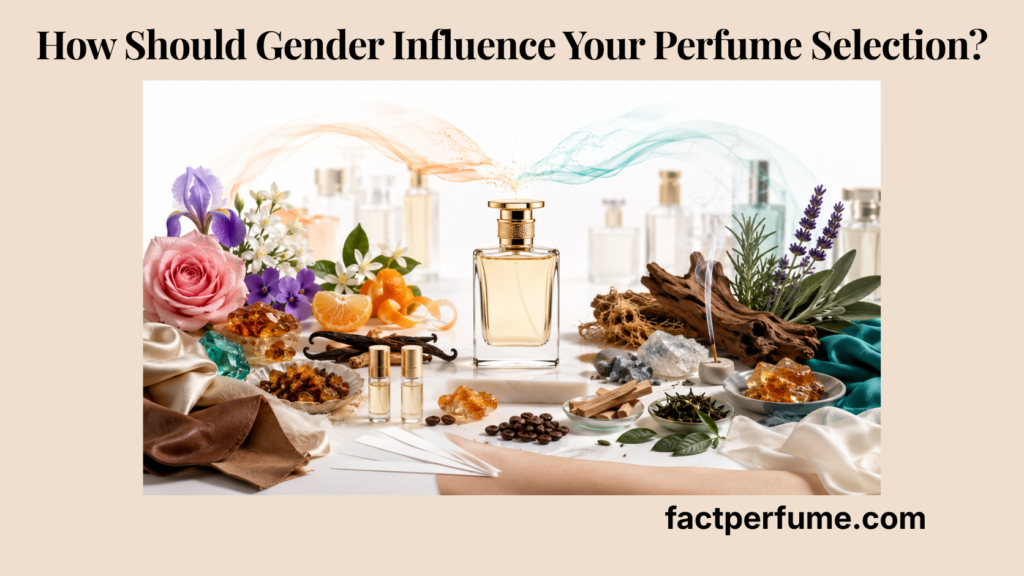
How Should Gender Influence Your Perfume Selection?
Gender should influence perfume selection only as a cultural, historical, commercial, stylistic, or expressive reference, while personal preference, comfort, setting, and tested fragrance behaviour remain more important. Masculine, feminine, unisex, and gender-neutral categories can describe familiar market styles, but they do not determine who may wear a fragrance or which materials a person is allowed to enjoy.
This article explains commercial classification, marketing history, feminine-coded and masculine-coded families, unisex perfumery, bottle and label bias, skin testing, expression-focused layering, and a final buying checklist. It separates gender identity, gender expression, biological sex, marketing category, and fragrance preference so readers can evaluate the perfume itself rather than letting labels or social expectations make the decision.
Why Does Gender Perfume Selection Depend on Marketing History, Culture, and Scent Perception?
Gender perfume selection depends on commercial classification, marketing history, culture, language, packaging, grooming traditions, and repeated scent associations rather than fixed ownership of fragrance materials. Commercial categories may describe broad styles, but they do not always match personal perception or suitability. Biological sex, gender identity, gender expression, marketing category, and fragrance preference remain separate. Gender-aware guidance works best when personal preference, supported by testing the opening, drydown, comfort, projection, climate fit, and repeat-wear appeal. These variables explain expectations, not who may personally wear the fragrance.
How Did Marketing Shape Gender Perfume Selection?
Marketing shaped gender perfume selection by repeatedly linking scent styles with campaign imagery, bottle design, retail sections, grooming ideals, romance, sport, authority, softness, and beauty. These categories can describe broad styles, but they can also restrict discovery. Research shows that preference may cross commercial masculine and feminine classifications (preference study). Experimental evidence also suggests that gender labels can frame scent evaluation under specific conditions without controlling every response (label-framing study). Marketing remains one influence among culture, memory, formula character, and individual taste.
How Did Florals Become Linked With Feminine Gender Perfume Selection?
Florals became strongly feminine-coded in many modern commercial markets through repeated links with cosmetics, beauty rituals, romance, glamour, softness, and decorative imagery. Rose, jasmine, tuberose, orange blossom, iris, violet, and peony commonly appear within this language. The association is a commercial convention unless direct evidence supports a narrower historical claim. Florals also appear in masculine-coded and unisex formulas, where woods, herbs, leather, musk, citrus, or spice can make them green, dry, smoky, restrained, or abstract.
How Did Fougère, Woody, and Aromatic Notes Become Linked With Masculine Gender Perfume Selection?
Fougère, woody, and aromatic styles became masculine-coded in many commercial markets through grooming, shaving, soap, barbershop, sport, professional, and outdoor associations. Lavender, coumarin, oakmoss-style accords, citrus, herbs, vetiver, and woods became familiar parts of that vocabulary. The coding has not always been binary. British wartime advertising used lavender and eau de Cologne across gender lines, showing that meanings can change with period and purpose (lavender history). The same materials now appear across masculine-coded, feminine-coded, and unisex formulas in current markets.
How Does Culture Change Gender Perfume Selection?
Culture changes gender perfume selection because rose, oud, musk, amber, jasmine, incense, sweetness, herbs, and smoke can carry different personal, ceremonial, luxurious, grooming, or gender associations. Meanings vary among regions, periods, communities, families, and individuals, so no country should be assigned one perfume rule. Cross-cultural sensory research supports broad variation through culture and experience but does not directly prove regional gender coding (cross-cultural study). The practical question is what the fragrance communicates within the intended setting. Individual experience can still differ within the same community.
This table shows how common scent associations can offer historical or commercial context while preserving alternative interpretations, cultural variation, personal testing, and the rule that no material belongs to one gender.
| Note or fragrance family | Common market association | Market or evidence context | Alternative association or interpretation | Possible source of the association | Personal testing cue | Main limitation |
|---|---|---|---|---|---|---|
| Rose and florals | Often feminine-coded | Modern convention | Green, dark, or unisex | Beauty imagery | Judge the drydown | Meaning varies |
| Lavender and fougère | Often masculine-coded | Grooming convention | Soft, floral, or flexible | Shaving and retail | Compare structures | Coding changes over time |
| Woods and vetiver | Often masculine-coded | Modern retail pattern | Creamy, sweet, or minimal | Outdoor imagery | Test texture | Wood does not predict performance |
| Vanilla and gourmand | Often feminine-coded | Some modern markets | Smoky, spicy, or neutral | Dessert language | Check density | Sweetness is not gender |
| Oud, leather, amber, and incense | Variable | Regional and luxury contexts | Sacred, soft, formal, or unisex | Tradition and luxury | Check comfort | No fixed regional meaning |
Practical caption: Treat each association as a context clue, then let the formula, drydown, comfort, setting, and personal meaning confirm or overturn the initial expectation.
How Do Historically Feminine-Coded Fragrance Families Shape Gender Perfume Selection?
Historically or commercially feminine-coded fragrance families shape gender perfume selection through familiar floral, gourmand, fruity, powdery, and cosmetic references. No family belongs to one gender, and a family name does not reveal sweetness, strength, projection, or longevity. Formula balance matters more than coding: woods can darken florals, spice can sharpen vanilla, leather can dry fruit, and musk can make powder feel clean. These families become easier to compare after understanding perfume types without treating taxonomy as a permission rule. Personal preference remains the final filter for every family.
Which Floral Families Influence Feminine-Coded Gender Perfume Selection?
Rose, jasmine, tuberose, orange blossom, iris, violet, peony, gardenia, and other florals can support romantic, green, clean, dark, creamy, powdery, sharp, or gender-neutral expression. Formula structure changes the result. Citrus and herbs can make florals airy or bitter; woods and leather can make them dry; musk can make them skin-like; spice can add warmth. Feminine coding may explain retail presentation, but the wearer should judge the complete accord rather than assume every floral communicates softness.
Which Gourmand Families Influence Feminine-Coded Gender Perfume Selection?
Vanilla, caramel, praline, honey, chocolate, almond, coffee, and related gourmand notes have often been feminine-coded in some modern markets but can feel dark, smoky, spicy, woody, luxurious, or gender-neutral. Woods, spice, amber, leather, tobacco, or bitter coffee can reduce a dessert-like effect. Sweetness is a sensory quality rather than a gender identity, and gourmand perfume is not automatically youthful. Evaluate sweetness, texture, projection, and drydown in the intended setting. Comfort and setting should guide the final choice.
Which Fruity Families Influence Feminine-Coded Gender Perfume Selection?
Peach, berry, plum, pear, apple, blackcurrant, and tropical-fruit notes have often been marketed through bright or feminine imagery but can support many expressions. Patchouli can make fruit earthy, woods can make it dry, leather can add tension, musk can soften it, and dry amber can deepen it. In contemporary markets, packaging may code fruit as feminine, yet the formula can feel tart, dark, green, elegant, woody, or gender-flexible. Fruit is not automatically youthful or feminine.
Which Powdery Families Influence Feminine-Coded Gender Perfume Selection?
Iris, violet, heliotrope, aldehydes, musk, and soft florals can create cosmetic, vintage, clean, dry, minimal, elegant, or gender-flexible powdery effects. Powderiness is not identical to sweetness. Iris may feel papery or mineral, while heliotrope may feel almond-like and soft. Powder appears in every marketed category. A wearer who dislikes cosmetic powder may still enjoy dry iris, clean musk, or an aldehydic structure after the drydown. Dryness and sweetness should be assessed separately.
This table compares feminine-coded family conventions through their notes, market context, modern range, wearer goals, and the assumptions that should not replace direct evaluation of the complete perfume.
| Fragrance family | Common notes | Historical or commercial association | Market or evidence context | Modern interpretation | Possible wearer goal | Bias to avoid |
|---|---|---|---|---|---|---|
| Floral | Rose, jasmine, peony | Commonly feminine-coded | Modern convention | Green, dark, woody, or unisex | Romantic or botanical | Every floral is soft |
| Gourmand | Vanilla, cocoa, coffee | Often feminine-coded | Dessert-led marketing | Smoky, bitter, or neutral | Warmth or depth | Sweetness equals gender |
| Fruity | Peach, pear, berry | Often feminine-coded | Packaging convention | Tart, dark, or flexible | Brightness or contrast | Fruit is always youthful |
| Powdery | Iris, violet, musk | Cosmetic association | Varies by period | Dry, mineral, or tailored | Elegance or texture | Powder belongs to one gender |
Practical caption: Compare texture, contrast, projection, and drydown before accepting feminine coding, because every listed family can support several modern and gender-flexible expressions.
How Do Historically Masculine-Coded Fragrance Families Shape Gender Perfume Selection?
Historically or commercially masculine-coded fragrance families shape gender perfume selection through fougère, woody, aromatic, leather, smoky, blue, and aquatic styles associated with grooming, structure, sport, or authority in particular markets. Every family remains available to every wearer, and masculine coding does not predict superior strength, projection, sillage, or longevity. A light woody perfume may sit close to skin, while a floral or gourmand may project strongly. Compare tested texture, development, comfort, social reach, and desired expression instead. Commercial coding provides useful selection context, not permission, performance evidence, or fixed ownership.
Which Fougère Families Influence Masculine-Coded Gender Perfume Selection?
Fougère structures combine lavender, coumarin, oakmoss-style accords, citrus, herbs, woods, and musk in ways commonly linked with masculine grooming in many modern fragrance markets. Depending on balance, they can feel crisp, soapy, soft, mossy, vintage, aromatic, tailored, floral, or gender-neutral. Lavender alone does not make a perfume masculine, and documented marketing has not always been binary. The wearer should test whether the formula feels fresh, sweet, mossy, musky, soft, or dry rather than relying only on its traditional retail position.
Which Woody Families Influence Masculine-Coded Gender Perfume Selection?
Cedarwood, sandalwood, vetiver, patchouli, oud, guaiac wood, and dry woods have often been masculine-coded but can feel creamy, soft, smoky, earthy, sensual, floral, sweet, or universal. Sandalwood may feel milky, vetiver grassy or mineral, and patchouli earthy or clean. Florals, musk, resin, leather, and spice can reshape the result. A woody label says little about gender, projection, or longevity until the complete formula is worn. Test the specific wood effect rather than the category.
Which Aromatic Families Influence Masculine-Coded Gender Perfume Selection?
Rosemary, sage, mint, lavender, thyme, basil, citrus, and green herbs often support grooming-style associations but can also create botanical, artistic, soft, floral, or gender-neutral perfumes. A cooling effect is sensory, not a gender marker. Aromatics can feel medicinal, culinary, airy, bitter, earthy, or garden-like depending on their companions. Test whether the herbal profile fits personal taste, climate, comfort, and setting rather than its retail category. Herbal freshness does not establish identity.
Which Leather, Smoky, Blue, and Aquatic Families Influence Masculine-Coded Gender Perfume Selection?
Leather and smoky structures, along with blue and aquatic categories, have often supported masculine-coded marketing, but they represent different scent structures and commercial traditions that should be evaluated separately.
Leather and Smoky Structures Can Support Flexible Scent Expression
Leather and smoky structures can combine suede, tobacco, smoke, birch, saffron, oud, incense, and dark woods to feel artistic, luxurious, sensual, dry, soft, formal, or unisex. Suede may feel smooth and intimate, while birch, smoke, or dark woods may feel sharper, drier, or more austere.
Blue and Aquatic Categories Reflect Contemporary Commercial Coding
Blue and aquatic categories often combine marine accords, ambroxan, citrus, aromatic freshness, clean woods, musks, or shower-gel-style effects. Their masculine coding is mainly a contemporary commercial convention rather than one classical family history. Neither ambroxan, leather, smoke, nor marine freshness is automatically masculine, and each formula requires its own test.
This table separates masculine-coded market conventions from actual formula character so readers can compare context, modern range, wearer goals, and the performance or ownership assumptions that should be avoided.
| Fragrance family | Common notes | Historical or commercial association | Market or evidence context | Modern interpretation | Possible wearer goal | Bias to avoid |
|---|---|---|---|---|---|---|
| Fougère | Lavender, coumarin, herbs | Commonly masculine-coded | Grooming convention | Soft, floral, or unisex | Freshness or structure | All lavender is masculine |
| Woody | Cedar, sandalwood, vetiver | Often masculine-coded | Modern retail pattern | Creamy, sweet, or intimate | Earthiness or warmth | Wood means stronger performance |
| Aromatic | Sage, mint, citrus | Grooming association | Contemporary convention | Botanical, bitter, or neutral | Clarity or freshness | Herbs are naturally masculine |
| Leather and smoky | Suede, tobacco, incense | Luxury or authority coding | Lifestyle imagery | Soft, formal, or artistic | Drama or texture | Darkness proves masculinity |
| Blue and aquatic | Marine accords, ambroxan | Often masculine-coded | Recent mainstream convention | Salty, mineral, or universal | Freshness or ease | Freshness is a gendered family |
Practical caption: Judge these families by structure, comfort, development, and social reach, not by assumptions that masculine coding guarantees greater strength, dryness, power, or longevity.
How Do Unisex and Gender-Neutral Fragrances Expand Gender Perfume Selection?
Unisex and gender-neutral fragrances expand gender perfume selection by reducing exclusive targeting and encouraging evaluation through notes, structure, texture, mood, skin development, and expression. These categories can broaden testing, but they do not create objective neutrality or universal suitability. A unisex perfume can be floral, sweet, smoky, rich, dense, or strongly projecting. A gender-neutral scent can feel bold rather than weak or minimal. Treat the label as an invitation to test, not a promise that every wearer will interpret the formula similarly. Suitability still depends on the individual formula and wearer.
How Does Ingredient-First Thinking Expand Gender Perfume Selection?
Ingredient-first thinking expands gender perfume selection by asking whether the wearer enjoys tea, woods, musk, citrus, florals, amber, incense, fig, vetiver, leather, or gourmand textures before considering the marketed category. A note list cannot reveal the full formula, proportion, strength, or drydown, so it should guide testing rather than replace it. Smell the opening, wait for development, and observe which materials dominate on suitable skin. Ingredients are sensory possibilities, not identity labels.
How Does Bottle Design Affect Gender Perfume Selection?
Bottle design affects gender perfume selection because colour, shape, typography, imagery, weight, and texture can create expectations before testing. Design may suggest softness, sport, luxury, boldness, youth, tradition, or fluidity even when the liquid develops differently. Perfume-bottle research identifies binary visual patterns alongside some fluid representations (bottle-design study). This supports awareness of packaging bias, not the claim that a colour or shape has one universal gender meaning or determines scent character. The liquid must be evaluated independently from the package.
How Do Balanced Notes Create Gender-Neutral Perfume Selection?
Balanced note contrasts can support gender-neutral expression when sweetness meets dryness, florals meet woods, amber meets citrus, leather meets iris, or musk meets green facets. Neutrality does not require equal proportions or a bland middle point. One facet may lead while another changes its context, such as rose becoming darker beside leather. The result remains subjective because culture, memory, and experience influence interpretation. Judge whether the complete contrast feels coherent, comfortable, and personally suitable.
How Do Niche and Independent Brands Expand Gender Perfume Selection?
Some niche and independent brands expand gender perfume selection by organizing fragrances around materials, places, moods, art, or concepts rather than separate gender counters. This may encourage ingredient-first discovery, but niche positioning does not guarantee quality, neutrality, or inclusivity. Some independent brands still use gendered storytelling, while some mainstream fragrances cross categories effectively. Evaluate the merchandising approach and formula instead of assuming one market sector is automatically more progressive. Market position should not substitute for testing.
This matrix compares six shopping routes so readers can use each cue for discovery without allowing labels, packaging, families, ingredients, moods, or prior preference to replace realistic testing.
| Selection route | Primary cue | Potential benefit | Main bias | Best testing method | Final decision question |
|---|---|---|---|---|---|
| Label-led | Marketed gender | Narrows options | Excludes scents | Cross-category test | Enjoyable without the label? |
| Packaging-led | Bottle | Signals mood | Creates expectations | Coded sample | Drydown matches design? |
| Family-led | Family name | Targets styles | Hides variation | Compare formulas | Which version fits? |
| Ingredient-led | Notes | Broadens discovery | Omits full structure | Test development | Enjoy the composition? |
| Mood-led | Descriptors | Connects expression | Frames judgement | Test in context | Creates the intended effect? |
| Preference-led | Enjoyment | Centers the wearer | Changes by setting | Repeat wear | Choose it again? |
Practical caption: Use each route to discover options, then let the tested opening, drydown, comfort, setting, projection, and repeat-wear preference determine the final choice.
How Can Gender Perfume Selection Avoid Restrictive Marketing Bias?
Gender perfume selection can avoid restrictive marketing bias by separating external category cues from the perfume’s actual opening, drydown, comfort, projection, and personal appeal. Bias cannot be removed perfectly because memory, familiarity, culture, and prior experience remain active. It can be reduced through cross-category sampling, coded strips, plain samples, repeated skin testing, and comparison of scent character with the marketed story. The purpose is not to prove that every label is useless. It is to prevent labels, bottles, aisles, or social approval from deciding before the wearer evaluates the formula.
How Can Label-Concealed Testing Reduce Gender Perfume Selection Bias?
Label-concealed testing can reduce some gender perfume selection bias by hiding the bottle, brand, category, or campaign story during the first evaluation. A friend or sales assistant can mark strips or samples with neutral codes, allowing the wearer to record opening, texture, mood, and preference first. The method is not perfectly blind because familiar scents, memories, and expectations may remain. Its value is practical: it reduces some visual and semantic cues during initial testing.
How Can Bottle Design Distort Gender Perfume Selection?
Bottle design can distort gender perfume selection when colour, shape, typography, imagery, or weight makes a perfume seem softer, stronger, younger, luxurious, traditional, or more gendered before smelling. Packaging can frame expectations, but it cannot determine the opening, drydown, projection, or comfort. Treat design as commercial meaning rather than scent evidence. Describe the fragrance before the bottle, then compare whether actual wear supports the visual story. No colour or shape has one universal gender meaning.
How Can “Pour Homme” and “Pour Femme” Labels Limit Gender Perfume Selection?
“Pour Homme,” “Pour Femme,” “for men,” and “for women” can limit gender perfume selection when shoppers reject a formula before testing it. These labels may provide commercial style information, so they are not always useless. The problem begins when classification becomes prohibition. Research suggests that perceived masculine and feminine qualities can overlap across marketed groups (gender-overlap study). Cross-category testing preserves context without surrendering personal judgement. The wearer should evaluate the formula before accepting or rejecting the category.
How Can Skin Testing Correct Gender Perfume Selection Assumptions?
Skin testing can correct gender perfume selection assumptions by showing how the perfume develops on that wearer under tested conditions. Observe the opening, drydown, warmth, sweetness, dryness, musk, projection, and comfort without calling the result male or female. Research on body odour and perfume blends supports wearer-specific evaluation rather than sex-based rules (perfume-body odour study). One test day may not represent every climate, setting, or application level. Ordinary wear testing also does not diagnose safety or sensitivity, so comfort must be monitored separately.
This shopping checklist reduces aisle, bottle, label, social-pressure, and assumed-performance bias. Complete it after realistic testing, not immediately after the first smell, and use any unchecked item as a reason to retest.
Practical caption: A perfume passes the bias check when its tested scent character matters more than the aisle, bottle, campaign narrative, gender label, or approval of other people.
How Can Gender Perfume Selection Use Layering to Adjust Scent Expression?
Gender perfume selection can use layering to adjust dryness, softness, sweetness, warmth, freshness, structure, and contrast while keeping the original fragrance preference recognizable. Layering changes perceived balance and expression rather than giving a perfume an objective gender. Practical compatibility means that separately label-compliant products smell coherent, feel comfortable, and project appropriately when tested together; it does not prove chemical compatibility. Expression adjustments become easier when perfume layering. Choose one main perfume and one simple supporting layer, begin conservatively, test at home, follow product labelling, and never pour perfumes together or modify their original bottles.
How Can Layering Make Gender Perfume Selection Feel Drier or More Structured?
A sweet or floral perfume may feel drier or more structured when carefully layered with a practically compatible transparent wood, cedar, vetiver, musk, tea, or aromatic fragrance. The supporting scent can add dryness, bitterness, greenery, or a cleaner frame without changing who the perfume is “for.” Dense oud, smoke, or leather may overpower a delicate formula. Test both perfumes separately, then evaluate the combined opening, drydown, comfort, density, and projection before public wear.
How Can Layering Make Gender Perfume Selection Feel Softer or Warmer?
A sharp woody, leather, or aromatic perfume may feel softer or warmer when paired conservatively with compatible musk, vanilla, iris, soft floral, or gentle amber. These materials may round sharp edges or add warmth, but they can also increase sweetness, density, and projection. Softer does not mean feminine. Use one supporting layer whose behaviour is known, and avoid heavily scented lotions unless their labelling and practical compatibility are clear. Test the combined drydown before public wear.
How Can Layering Make Gender Perfume Selection Feel More Gender-Neutral?
Layering may create a more gender-neutral expression by contrasting sweet and dry, floral and woody, fresh and musky, amber and citrus, or leather and iris facets. The result remains subjective, and the original formulas retain their individual character. Layering therefore does not erase every existing association. Avoid stacking several complex perfumes, which can create a muddy or dense result. One clear contrast is easier to evaluate than several competing structures.
How Can Spatial Layering Improve Gender Perfume Selection?
Spatial layering can preserve clearer scent contrast by applying compatible fragrances to separate suitable areas rather than placing multiple wet applications on one spot. Follow product labelling, avoid irritated skin, and test fabric compatibility before clothing application. Separation may keep each perfume recognizable, but it does not automatically reduce total exposure, projection, or sillage. The total amount still matters. Test at home and reduce application if the result becomes intrusive, uncomfortable, or too dense. Spatial separation is not automatically safer than direct overlap.
This layering checklist turns one expression goal into a controlled test. It protects clarity, comfort, product integrity, and social reach while preventing the combination from being described as an objective change of gender.
Practical caption: Keep one clear adjustment goal, test the total result conservatively, and return to one perfume whenever layering reduces clarity, comfort, balance, or appropriate projection.
What Checklist Should Guide Gender Perfume Selection Before Buying?
A final gender perfume selection checklist should confirm that the fragrance fits preference, desired expression, skin development, comfort, setting, and tested performance beyond its marketed category. Gender is one factor within a wider purchase decision. A perfume may suit the desired expression yet project too strongly for the setting, or wear beautifully despite conflicting with the bottle story. Combine gender with perfume buying factors. The outcome may be to buy, sample, retest, compare, simplify, reserve, or reject. Use the result to choose the least complicated next step.
Does the Perfume Match Your Scent Preference Beyond Gender Labels?
A perfume matches personal preference when the wearer enjoys its opening and drydown without needing the gender label or campaign story to justify it. Genuine fit includes comfort and repeat-wear interest rather than one impressive first smell. Preference still needs context: a loved scent may project too strongly for a quiet setting or feel dense in heat. The strongest signal is wanting to wear the perfume again under realistic conditions.
Does the Perfume Match Your Desired Gender Expression?
A perfume matches desired gender expression when its sweetness, dryness, softness, intensity, freshness, warmth, florals, woods, or texture align with the wearer’s intended style. That style may be masculine, feminine, neutral, fluid, soft, bold, clean, sensual, or personal. Fragrance can support expression, but it does not prove identity, personality, sexuality, confidence, maturity, profession, or status. It succeeds when it communicates the intended effect without requiring permission. Personal identity and scent expression may align or differ.
Does the Perfume Work on Your Skin?
A perfume works on the skin when its opening, drydown, sweetness, sharpness, warmth, musk, projection, longevity, and comfort remain suitable under tested conditions. Evaluate it in a realistic climate and setting because heat, clothing, application, and environment can change the experience. Do not create sex-based skin rules or assume biological sex predicts performance. Stop use if discomfort or a concerning reaction develops. One test may not represent every season or setting.
Would You Still Choose the Perfume Without the Label?
A wearer would still choose the perfume without its label when the scent remains enjoyable after bottle design, brand story, retail section, and commercial category are reduced from consideration. Labels can provide style context, so cue reduction is not perfect objectivity. It is a final honesty check. When the fragrance remains compelling without its external story, the decision is more likely to reflect genuine preference rather than category pressure. The perfume itself should remain persuasive.
This final checklist confirms whether preference, expression, skin experience, comfort, setting, performance, and evidence align. Complete it only after the drydown, and use uncertainty as a reason to sample or retest.
Practical caption: The strongest buying signal is alignment between real preference, comfort, expression, setting, and tested performance, not compliance with a marketed masculine, feminine, or unisex category.
This outcome table converts the completed checklist into a practical next step, covering buying, sampling, retesting, comparing, simplifying, reserving, rejecting, and stopping when the tested result is unsuitable.
| Checklist result | Recommended decision |
|---|---|
| Preference, comfort, expression, setting, and performance align | Consider buying |
| Label or bottle may be influencing judgement | Retest with cues reduced |
| Projection or drydown remains uncertain | Sample or retest |
| The expression feels too sweet, dry, sharp, or dense | Compare another version or test one simple layer |
| Combined projection or density is excessive | Wear one alone or reduce total application |
| Social expectations fit, but personal preference does not | Reject the expectation and continue testing |
| Preference fits, but the setting does not | Reserve it for another context |
| Discomfort or a concerning reaction develops | Stop use and avoid purchase |
Practical caption: Choose the simplest action that resolves uncertainty, whether that means buying, sampling, retesting, comparing, simplifying, reserving, rejecting, or stopping use.
Frequently Asked Questions
Perfume notes are not naturally owned by one gender, although commercial classification, marketing, grooming traditions, language, culture, and repeated use can create masculine-coded or feminine-coded associations. The same rose, wood, musk, citrus, leather, vanilla, or aromatic note can appear in masculine-coded, feminine-coded, unisex, and gender-neutral formulas.
Anyone can test and wear a perfume from any marketed category when the fragrance fits personal preference, comfort, setting, and desired expression. The useful question is whether the product performs comfortably and appropriately for the wearer, not whether the label grants identity permission or controls who may use it.
Unisex does not guarantee a gender-neutral smell because it is a marketing category, while individual formulas may still feel strongly floral, sweet, woody, smoky, fresh, rich, or dense. Different wearers may also interpret the same unisex perfume differently, so direct testing remains necessary.
Masculine-coded perfumes do not automatically last longer because longevity depends on the actual formula, materials, concentration, application, skin, clothing, climate, and perception. Commercial gender classification does not provide a reliable measurement of projection, sillage, wear time, or comfort on a particular wearer.
Layering can change perceived dryness, softness, warmth, sweetness, freshness, or structure, but it does not give a perfume an objective gender. Test one simple supporting layer conservatively, evaluate the combined drydown and projection, and return to one perfume when the blend becomes muddy, excessive, or uncomfortable.
Label-concealed testing can reduce bottle and label cues, but prior experience, memory, scent familiarity, and personal associations may still influence judgement. It is a practical bias-reduction method rather than a perfect scientific control or a guarantee of complete objectivity during perfume selection.
Conclusion
Gender should influence perfume selection only by providing cultural, historical, commercial, stylistic, or expressive context around the fragrance. Commercial classification, marketing history, cultural association, feminine-coded and masculine-coded families, unisex selection, bias reduction, skin testing, conservative layering, and the final checklist can all inform the decision without creating ownership rules. Every fragrance family remains available to every wearer, while actual opening, drydown, comfort, projection, setting, and repeat-wear satisfaction should consistently outweigh the category printed on the bottle during the final decision.
The right gender-aware perfume is the fragrance that fits the wearer’s real preference, comfort, setting, and chosen form of scent expression beyond the limits of its label.