
What Exactly Is an Aromatic Perfume?
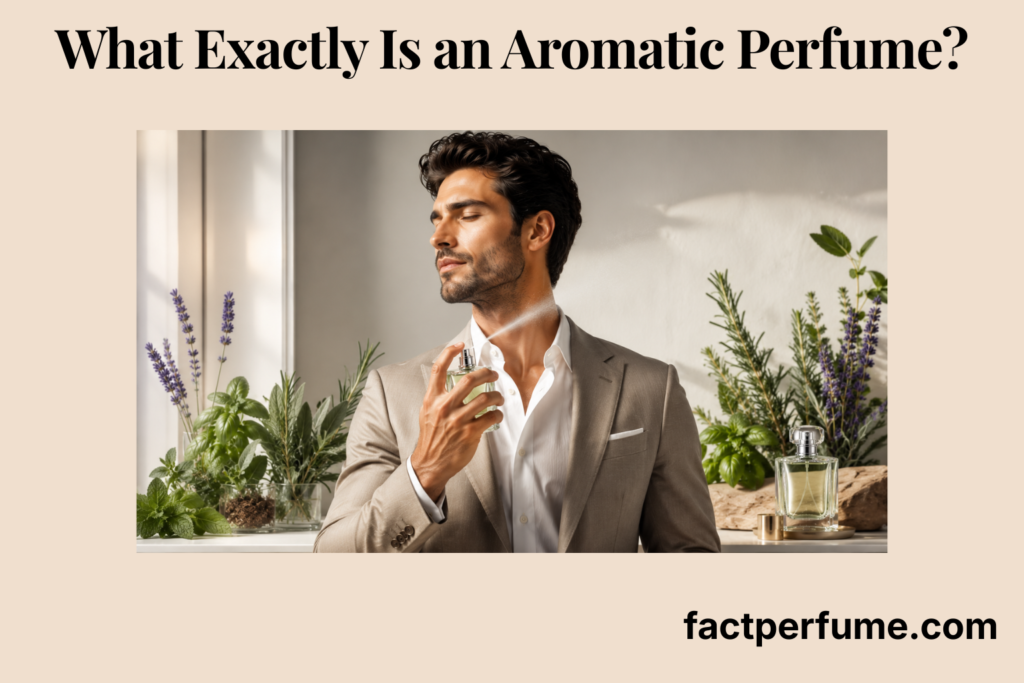
An aromatic perfume is a fragrance style built around herbal, green, fresh, spicy-fresh, or botanical notes such as lavender, rosemary, sage, thyme, basil, mint, geranium, and clary sage.
Aromatic perfumes often smell fresh, clean, herbal, cooling, sharp, refined, green, or barbershop-like depending on the formula. This page defines the aromatic scent profile, explains its core botanical notes, compares the main sub-families, troubleshoots common scent problems, and shows how to test and apply aromatic perfumes with restraint.
Quick Answer
Aromatic perfume is a fragrance style built around herbal, green, fresh, spicy-fresh, or botanical notes such as lavender, rosemary, sage, thyme, basil, mint, geranium, and clary sage.
Definition
An aromatic perfume is a scent composition where herbal and botanical materials shape the main identity of the fragrance.
Key Takeaway
Aromatic perfumes are easiest to understand by identifying the herbal core, checking the supporting base, comparing the sub-family, testing the dry-down, and applying with restraint.
What Defines an Aromatic Perfume in Perfumery?
An aromatic perfume is defined in perfumery by its reliance on herbal, green, fresh, spicy-fresh, or botanical notes that create a clean and plant-like scent identity.
Aromatic perfume sits within the broader map of perfume types, where scent families are grouped by notes, structure, and wearability. This page stays focused on the aromatic definition rather than full fragrance taxonomy.
Common aromatic fragrance notes include lavender, rosemary, sage, thyme, basil, mint, geranium, and clary sage. These materials can create fresh, clean, herbal, cooling, sharp, refined, green, or barbershop-like impressions, but no aromatic perfume has to contain every note.
Aromatic perfumes often overlap with fougère, fresh, woody, aquatic, citrus, and green styles. That overlap explains why an aromatic scent can feel polished and classic in one formula, leafy and botanical in another, or bright and citrus-herbal in a lighter structure.
Botanical Component Breakdown Chart
This chart identifies common aromatic materials as scent-building cues, not universal formula requirements or skin-safety claims.
| Botanical Note | Scent Profile | Common Role | Typical Impression |
|---|---|---|---|
| Lavender | Clean, herbal, slightly floral | Classic aromatic core | Refined, barbershop-like, fresh |
| Rosemary | Sharp, green, herbal | Adds brisk herbal structure | Clean, culinary-herbal, energetic |
| Sage | Dry, herbal, refined | Adds green aromatic depth | Calm, mature, slightly earthy |
| Thyme | Sharp, green, herbal-spicy | Adds crisp botanical edge | Dry, savory, aromatic |
| Basil | Green, crisp, aromatic | Adds leafy freshness | Bright, botanical, fresh |
| Mint | Cool, bright, fresh | Adds cooling lift | Crisp, energetic, sharp |
| Geranium | Green, rosy, aromatic | Balances sharp herbs | Soft, polished, refined |
| Clary sage | Herbal, musky, soft | Adds texture and smoothness | Relaxed, aromatic, slightly earthy |
Claim and Boundary Pairing Table
This table keeps aromatic perfume interpretation useful without turning note names into universal performance, safety, or formula guarantees.
| Claim | Boundary |
|---|---|
| Aromatic perfumes are built around herbal, green, fresh, spicy-fresh, or botanical notes. | Do not assume every aromatic perfume contains the same notes. |
| Lavender, rosemary, sage, thyme, basil, mint, geranium, and clary sage are common aromatic materials. | Do not treat them as mandatory materials in every formula. |
| Aromatic perfumes can smell clean, herbal, cooling, sharp, refined, or barbershop-like. | Do not claim every wearer perceives the same scent character. |
| Woods, musks, coumarin, vetiver, mossy effects, and patchouli can support the dry-down. | Do not promise exact longevity or stronger performance. |
| Moderate application can make aromatic perfumes feel more refined. | Do not give one-size-fits-all application rules or one-size-fits-all rules. |
Which Botanical Ingredients Create the Aromatic Perfume Profile?
The aromatic perfume profile is created by botanical notes that combine herbal freshness, green sharpness, cooling lift, and soft aromatic texture.
Lavender often provides a clean, classic, slightly floral-herbal aromatic center. Rosemary, sage, and thyme can make the profile sharper, greener, drier, or more culinary-herbal depending on the formula.
Mint and basil can create a crisp, cooling, energetic opening. Rosemary, sage, thyme, basil, and mint can point readers toward herbaceous aromatic perfumes when the fragrance emphasizes fresh herbal structure.
Geranium and clary sage can soften the aromatic scent profile by adding floral-green, musky, or rounded texture. These materials can help balance sharp herbs without making the fragrance lose its botanical identity.
Woods, mossy effects, musks, vetiver, coumarin, and patchouli can support the aromatic structure in the dry-down. The way herbs, musks, woods, and coumarin interact becomes clearer when studying aromatic composition and longevity.
Which Aromatic Perfume Sub-Families Should You Know?
The main aromatic perfume sub-families include aromatic fougère, aromatic aquatic, aromatic woody, aromatic citrus, and aromatic green styles, each using herbal freshness in a different scent structure.
Sub-families help readers recognize how aromatic notes behave when paired with different supporting materials. They are useful for preference mapping, but they should not be ranked from best to worst or treated as universal fits for every wearer, setting, season, or climate.
Aromatic Perfume Sub-Family Comparison Table
This table distinguishes aromatic directions without treating any sub-family as suitable for every wearer.
| Sub-Family | Core Notes | Typical Character | Best Setting |
|---|---|---|---|
| Aromatic Fougère | Lavender, coumarin, mossy effects, woods, musks | Polished, classic, clean, barbershop-like | Often suits refined daytime, office, or formal-casual settings when applied moderately |
| Aromatic Aquatic | Mint, basil, marine notes, mineral freshness, clean musks | Cool, watery, casual, fresh | Often suits warm weather, relaxed wear, or vacation-style freshness |
| Aromatic Woody | Sage, thyme, rosemary, cedar, vetiver, patchouli | Dry, earthy, mature, grounded | Often suits evening, cooler weather, or understated style |
| Aromatic Citrus | Lavender, rosemary, bergamot, lemon, petitgrain, neroli | Bright, crisp, professional, energetic | Often suits daytime, spring/summer, or clean professional settings |
| Aromatic Green | Basil, galbanum, mint, leafy notes, grass-like effects | Sharp, botanical, leafy, crisp | Often suits wearers who prefer sharper botanical freshness |
A classic fougère direction usually depends on aromatic fougère ingredients such as lavender, coumarin, mossy effects, woods, and musks. Crisp botanical freshness often overlaps with green aromatic perfumes, while citrus can brighten herbal structures through the citrus aromatic effect.
Why Do Some Aromatic Perfumes Smell Medicinal, Soapy, or Too Sharp?
Some aromatic perfumes smell medicinal, soapy, or too sharp because herbal, minty, musky, lavender-heavy, or green materials can dominate differently depending on formula, skin, heat, grooming products, and application amount.
These impressions are not always flaws. A medicinal edge may feel crisp and bracing in one formula, while a soapy impression may feel clean and polished in another.
The practical goal is to identify whether the issue comes from formula balance, wearer perception, grooming interference, or application intensity. If aromatic freshness fades quickly, the next step is understanding aromatic perfume longevity and projection.
Aromatic Scent Problem-Solution Table
This table helps troubleshoot common aromatic scent impressions without diagnosing skin chemistry or inventing performance numbers.
| Problem | Likely Cause | Better Fix | What To Avoid |
|---|---|---|---|
| The scent smells medicinal | Camphor-like herbs, mint, eucalyptus-style effects, or sharp aromatics dominate | Choose softer aromatic styles with lavender, musk, citrus, woods, or coumarin support | Avoid over-applying sharp herbal formulas |
| The scent smells too soapy | Clean musks, aldehydic effects, or lavender-heavy structures feel laundry-like | Try greener, woodier, or citrus-aromatic profiles | Avoid assuming all clean scents will smell the same |
| The scent turns sharp on skin | Heat, sweat, dry skin, over-application, or scented grooming products may affect perception | Test on clean skin and reduce competing scented products | Avoid judging only from the first spray |
| The aromatic freshness fades quickly | Some herbal and green openings soften faster than woody or musky bases | Choose aromatic perfumes with woods, musks, vetiver, coumarin, mossy effects, or amber-style support | Avoid expecting exact longevity from note names alone |
How Should You Test and Apply an Aromatic Perfume?
An aromatic perfume should be tested first on paper, then on clean skin, and judged after the dry-down because herbal openings can shift into smoother woody, musky, mossy, or coumarin-supported bases.
Paper testing helps reveal the aromatic structure away from skin variables. Skin testing then shows how the perfume behaves with body heat, grooming products, and the wearer’s natural scent environment.
Moderate application is useful because herbal notes can feel sharper when over-applied. If clothing is used, apply only when the product label and fabric type are suitable, and avoid delicate, light-colored, or stain-prone fabrics.
Combining scents should stay controlled. Deeper scent-combination questions belong to aromatic layering, where compatibility matters more than adding more fragrance.
Aromatic Perfume Application Flowchart
This flowchart keeps testing practical and controlled while avoiding harsh fabric advice, one-size-fits-all application rules, or medical skin claims.
| Step | Purpose | Result |
|---|---|---|
| Blotter Test | Shows the fragrance structure away from skin variables | Helps identify the herbal, green, or fresh aromatic direction |
| Skin Test | Shows how the perfume behaves on the wearer | Helps reveal sharpness, softness, soapiness, or warmth |
| Dry-Down Check | Allows base notes to appear after the opening softens | Prevents judging only the first spray |
| Clean Skin Application | Reduces interference from sweat or scented products | Keeps the aromatic profile clearer |
| Moderate Application | Prevents herbal notes from projecting too sharply | Creates a cleaner, more refined scent trail |
| Fabric-Safe Check | Confirms whether clothing application is suitable | Reduces risk of staining or fabric damage |
What Is the Ultimate Checklist for Understanding and Wearing Aromatic Perfumes?
The ultimate aromatic perfume checklist is to identify the herbal core, match the sub-family to your goal, test for medicinal or soapy effects, check the dry-down, and apply with restraint.
This checklist turns the aromatic perfume definition into a practical recognition method. It helps readers understand the scent family, choose a better fragrance direction, and wear aromatic freshness without forcing performance or suitability claims.
Final Aromatic Perfume Checklist
This checklist summarizes the article only and does not add new perfume types or performance claims.
| Action | Reason | Result |
|---|---|---|
| Identify the herbal core | Aromatic perfumes are defined by botanical, green, herbal, or spicy-fresh notes | You understand the scent family clearly |
| Match the sub-family to your goal | Fougère, aquatic, woody, citrus, and green aromatics create different moods | You choose a better fragrance direction |
| Test for medicinal or soapy effects | Some aromatic materials can feel sharp depending on formula and skin | You reduce poor-fit choices |
| Check the dry-down | The base reveals whether the perfume stays balanced | You judge the full scent more accurately |
| Apply with restraint | Aromatic notes can project sharply when over-applied | You create refined, wearable freshness |
- Look for herbal, green, fresh, spicy-fresh, or botanical identity first.
- Compare the aromatic direction before assuming it fits your taste.
- Test on paper and skin before judging the opening.
- Wait for the dry-down because aromatic openings can soften into woody, musky, mossy, or coumarin-supported bases.
- Apply moderately to keep herbal freshness refined instead of forceful.
Frequently Asked Questions
An aromatic perfume is not exactly the same as a fresh perfume because aromatic perfumes are defined by herbal and botanical notes, while fresh perfumes can also include citrus, aquatic, green, airy, or clean-musky effects.
Aromatic perfumes are often marketed in masculine fragrance styles, especially through fougère structures, but aromatic notes can also appear in feminine, unisex, and gender-neutral compositions.
Aromatic perfume longevity depends on the full formula, concentration, base support, application amount, skin condition, and environment rather than the aromatic note category alone.
An aromatic perfume may smell soapy when lavender-heavy structures, clean musks, aldehydic effects, or very polished fresh materials dominate the formula. Testing greener, woodier, or citrus-aromatic styles can help.
Beginners should choose an aromatic perfume by testing whether they prefer classic fougère freshness, cool aquatic freshness, dry woody herbs, bright citrus herbs, or sharper green botanical notes.
Conclusion
An aromatic perfume is best understood as a herbal, green, fresh, spicy-fresh, or botanical fragrance style shaped by notes such as lavender, rosemary, sage, thyme, basil, mint, geranium, and clary sage.
The clearest way to understand one is to identify the herbal core, compare the sub-family, notice medicinal or soapy edges, test the dry-down, and apply with restraint. Aromatic perfumes should be judged by structure, dry-down, and wearer experience rather than by product hype or note names alone.