
How Does the Composition of Aromatic Perfumes Influence Their Scent and Longevity?
The composition of aromatic perfumes influences scent and longevity by connecting fresh herbal openings to aromatic heart notes and supportive base materials that shape how the fragrance develops and wears over time.
This article explains aromatic perfume composition and longevity through the olfactory pyramid, supportive base-note materials, concentration behavior, skin-performance fixes, controlled application, light layering, and a final checklist for improving aromatic scent performance responsibly.
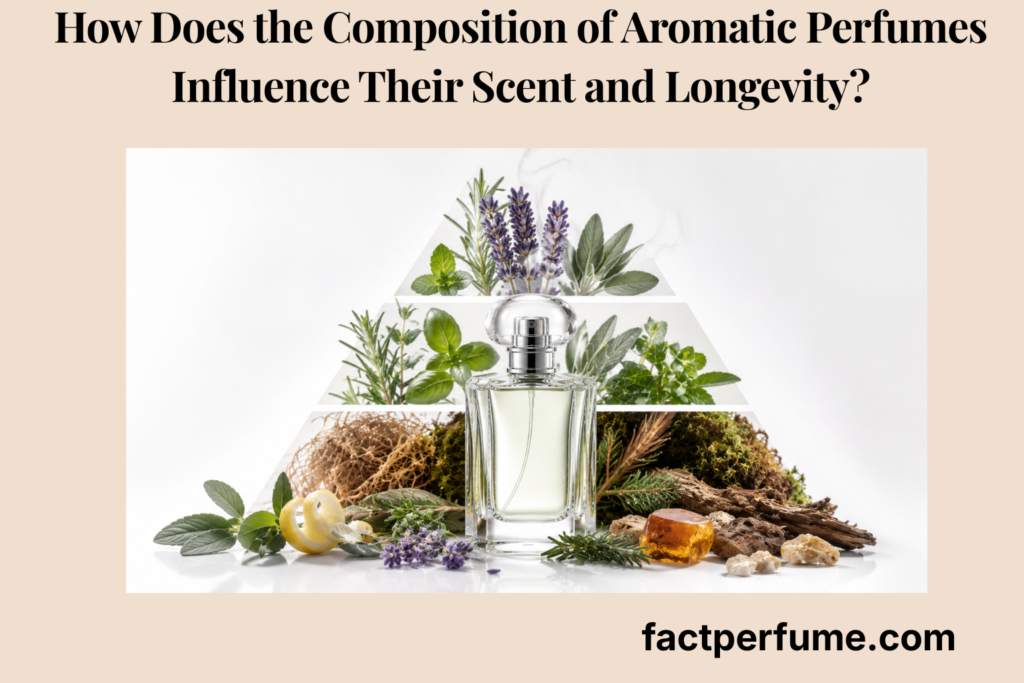
Why Does Aromatic Perfume Composition Use an Olfactory Pyramid?
Aromatic perfume composition uses an olfactory pyramid because the scent usually develops from a fresh herbal opening into an aromatic heart and then a more grounded base.
Aromatic perfumes belong within the broader system of perfume types, but this page focuses only on composition and longevity. An aromatic perfume usually depends on herbal, green, lavender, rosemary, sage, citrus, woody, or mossy materials arranged into a structured scent.
The pyramid is not a rigid timer. It is a practical way to explain how aromatic fragrance structure opens, connects, anchors, and dries down depending on formula, concentration, skin, climate, application, fabric, and environment.
Top Stage
The top stage of an aromatic perfume often opens with fresh herbal, citrus, mint, lavender, basil, or rosemary effects.
This stage creates the first crisp, clean, or energizing impression. A herbaceous aromatic profile often emphasizes lavender, sage, rosemary, basil, mint, or other crisp herbal effects, but not every aromatic perfume uses the same opening.
Heart Stage
The heart stage of an aromatic perfume may move into lavender, geranium, clary sage, spices, green notes, or soft florals.
This stage builds the main aromatic character and connects fresh lift to the dry-down so the perfume does not feel like a brief herbal opening followed by an unrelated base.
Base Stage
The base stage of an aromatic perfume may use woods, mossy effects, musks, coumarin, vetiver, patchouli, or amber-style materials to support the dry-down.
This stage helps the aromatic scent feel more grounded and potentially longer-lasting, but base notes do not guarantee long wear by themselves.
User Takeaway
The main takeaway is that aromatic perfume longevity depends on how well the fresh herbal opening connects to the heart and base.
Aromatic Olfactory Pyramid Diagram
This table keeps longevity language qualitative and avoids exact evaporation timelines, projection distances, or molecular-performance claims.
| Pyramid Stage | Common Aromatic Materials | Scent Role | Longevity Role |
|---|---|---|---|
| Top | Citrus, mint, basil, rosemary, lavender lift, crisp herbal facets | Creates the first clean, green, fresh, or energizing impression | Sets the opening but may feel brief if not connected to deeper materials |
| Heart | Lavender, sage, clary sage, geranium, green notes, soft florals, spices | Builds the main aromatic identity and connects freshness to body | Helps the scent feel continuous after the opening softens |
| Base | Woods, mossy effects, musks, coumarin, vetiver, patchouli, amber-style materials | Grounds the aromatic structure and shapes the dry-down | May support longer perceived wear without guaranteeing longevity |
Which Base Ingredients Support the Longevity of an Aromatic Fragrance Structure?
Base ingredients support aromatic fragrance longevity when they add dry-down structure, warmth, depth, or smoothness without covering the herbal, green, lavender, or citrus identity.
Supportive base notes should be read as structure, not as guaranteed fixatives. A green aromatic profile can use herbal and leafy materials supported by woods, mossy effects, or musks, while an earthy aromatic profile may rely on vetiver, patchouli, mossy effects, or woods to make the dry-down feel deeper.
If You Want a Classic Barbershop Aromatic Profile
A classic barbershop aromatic profile may benefit from oakmoss-style, coumarin, lavender, musk, or soft woody support.
The result can be a more grounded fougère-style dry-down. A classic barbershop dry-down often connects to aromatic fougère ingredients such as lavender, coumarin, mossy effects, and woods, but ingredient identity and safety claims require reliable evidence.
If You Want a Green Forest-Like Aromatic Profile
A green forest-like aromatic profile may benefit from vetiver, patchouli, cedar, mossy effects, or resin touches.
The result can be a deeper green structure that may last longer. Too much patchouli, resin, or mossy material can also overpower herbal clarity.
If You Want a Modern Clean Aromatic Profile
A modern clean aromatic profile may benefit from ambroxan-style materials, clean musks, mineral notes, or dry woods.
The result can be a smoother, more radiant aromatic trail. Ambroxan-style materials and musks should not be treated as guaranteed projection or longevity fixes.
If You Want a Fresh Herbal Aromatic Profile
A fresh herbal aromatic profile may benefit from tea, citrus, musk, soft woods, or gentle amber-style support.
The result can be freshness with more structure beyond the opening. Citrus can sharpen the opening, while citrus aromatic effect explains how bright citrus interacts with herbal freshness.
Aromatic Fixative Selection Matrix
This matrix uses qualitative support guidance only and avoids fixative ratings, ingredient percentages, or guaranteed performance claims.
| Desired Aromatic Vibe | Supportive Base Notes | Longevity Role | What To Avoid |
|---|---|---|---|
| Classic barbershop | Oakmoss-style effects, coumarin, lavender, musk, soft woods | Grounds a fougère-style dry-down | Natural moss or safety claims without sources |
| Green forest-like | Vetiver, patchouli, cedar, mossy effects, resin touches | Adds dry green depth and structure | Overpowering herbal clarity with heavy earthiness |
| Modern clean | Clean musks, ambroxan-style materials, mineral notes, dry woods | Smooths the dry-down and may support a cleaner trail | Assuming musks or amber-style materials guarantee projection |
| Fresh herbal | Tea, citrus, musk, soft woods, gentle amber-style support | Extends freshness beyond the opening | Making the profile too sweet or amber-dominant |
| Woody aromatic | Cedar, vetiver, dry woods, soft mossy effects | Gives the aromatic scent more structure | Making the composition too dry or bitter |
| Soft fougère-style | Lavender, coumarin, musk, mossy effects, soft woods | Connects aromatic freshness to a warmer dry-down | Turning supportive warmth into heavy sweetness |
How Do Concentration Types Affect Aromatic Scent Longevity and Projection?
Concentration types affect aromatic scent longevity and projection by changing the balance between fresh lift, heart fullness, dry-down depth, and skin closeness, but formula structure matters more than the label alone.
This page explains composition, while aromatic longevity and projection can go deeper into scent trail behavior. Concentration should be tested on skin because aromatic structure can behave differently across EDT, EDP, parfum, and extrait styles.
Eau de Toilette
An Eau de Toilette aromatic perfume often feels brighter, fresher, and more lifted when the formula emphasizes herbal and citrus diffusion.
It can suit users who want a crisp aromatic opening and lighter daily wear. EDT should not be assumed to always project more or fade faster.
Eau de Parfum
An Eau de Parfum aromatic perfume may balance aromatic freshness with a fuller heart and more supportive base.
It can suit users who want a fuller heart, a more supported dry-down, or a more rounded aromatic profile depending on formula. EDP does not always last longer than EDT.
Parfum or Extrait
A parfum or extrait aromatic perfume may feel smoother, deeper, and closer to skin depending on the formula.
It can suit users who prefer richness and longevity over airy projection. Parfum or extrait should not be expected to always project more.
User Takeaway
The main takeaway is that concentration matters, but formula structure matters more than the label alone.
Aromatic Concentration Performance Table
This table uses flexible, formula-dependent language and avoids oil percentages, projection distances, longevity hours, or strength rankings.
| Concentration | Opening Feel | Projection Style | Dry-Down Behavior | Best Use |
|---|---|---|---|---|
| EDT | Often brighter, crisper, and more lifted | May feel airy or more immediate | Can feel cleaner and lighter depending on base support | Daily wear when crisp herbal freshness is preferred |
| EDP | May feel rounder and less sharply lifted | Often feels fuller, but not always stronger | Can show more heart and base structure depending on formula | Aromatic profiles where fullness and dry-down support matter |
| Parfum | May feel smoother and less sparkling | Can sit closer to skin depending on formula | May emphasize depth, warmth, and texture | Users who prefer richness and controlled presence |
| Extrait | May feel dense, smooth, and concentrated | Can be intimate rather than loud | May emphasize long dry-down texture when formula supports it | Users who prefer depth over airy projection |
How Can You Fix Skin Issues That Make Aromatic Perfumes Fade Quickly?
You can fix many aromatic perfume performance problems by improving skin preparation, avoiding competing scented products, choosing stronger base support, and adjusting application for heat, sweat, or cold weather.
Skin-performance language should stay non-diagnostic. Dryness, sweat, heat, cold air, and grooming products can change perceived aromatic scent performance, but they should not be used to diagnose skin conditions or prove a formula is defective.
Problem: The Aromatic Perfume Fades Quickly
An aromatic perfume may fade quickly when dry skin, heat, weak base support, or a light formula structure reduces perceived wear.
The better fix is to apply to clean, lightly moisturized skin and choose formulas with woods, musks, vetiver, mossy effects, or coumarin. Moisturizer and base notes can support wear, but they do not guarantee longevity for every formula or wearer.
Problem: Herbal Notes Turn Sharp or Metallic
Herbal notes may turn sharp or metallic when skin condition, sweat, high heat, or competing grooming products interfere with the aromatic profile.
The better fix is to use unscented grooming products and test softer aromatic profiles. Do not interpret sharpness as a medical diagnosis.
Problem: The Scent Feels Weak in Cold Weather
An aromatic perfume may feel weak in cold weather because cool air can reduce perceived projection or make the scent feel closer to skin.
The better fix is to moisturize first and use fabric-safe application when appropriate. Cold weather does not always weaken longevity, and fabric should be used only when safe for the garment.
Problem: The Fragrance Becomes Too Heavy After Layering
An aromatic perfume can become too heavy after layering when too many oils, lotions, or strong base layers cover the herbal character.
The better fix is to use one light support layer and test before full wear. Heavy oils, sweet layers, or multiple strong bases can hide aromatic clarity.
Aromatic Longevity Troubleshooting Table
This table avoids medical diagnosis, universal skin claims, exact performance timelines, and aggressive layering recommendations.
| Problem | Likely Cause | Better Fix | What To Avoid |
|---|---|---|---|
| Fades quickly | Dry skin, light base support, heat, or formula design | Use clean, lightly moisturized skin and look for supportive base structure | Expecting moisturizer or base notes to guarantee longevity |
| Herbal notes turn sharp | Sweat, heat, dry skin, or competing grooming products | Use unscented grooming products and test softer aromatic profiles | Diagnosing skin chemistry or medical conditions |
| Weak in cold weather | Cool air may reduce perceived projection | Moisturize first and consider fabric-safe application | Assuming cold always weakens longevity |
| Too heavy after layering | Too many oils, lotions, or strong bases | Use one light support layer only when needed | Heavy oils or multiple strong scent layers |
| Dry skin | Reduced smoothness or faster perceived fade | Apply to clean, lightly moisturized skin when appropriate | Applying fragrance to irritated or broken skin |
| Sweat distortion | Heat and moisture shift the aromatic profile | Use lighter application and test in real conditions | Overspraying to fight heat |
| Competing grooming products | Scented lotion, deodorant, hair product, or body wash | Test with unscented grooming products | Blaming the perfume before isolating interference |
How Should You Apply and Layer Aromatic Perfumes for Longer Wear?
You should apply and layer aromatic perfumes for longer wear by preparing clean skin, moisturizing lightly, choosing smart zones, using only compatible light layers, and refreshing moderately.
Controlled aromatic layering can support structure when the added layer does not hide lavender, sage, rosemary, or green notes. Application amount may change by setting, while aromatic occasions explain where different aromatic profiles fit best.
Step 1: Start With Clean Skin and Unscented Grooming Products
Clean skin and unscented grooming products reduce competing scent interference.
The purpose is to keep the aromatic profile clearer. Unscented products do not guarantee longevity, but they make performance easier to judge.
Step 2: Moisturize Lightly Before Spraying
Light moisturizer can support smoother wear on skin.
The purpose is to reduce dryness and support smoother aromatic performance. The scent may last longer and feel less sharp, but moisturizer does not always improve longevity.
Step 3: Spray Selected Zones
Selected zones such as the neck, upper chest, outer forearms, or fabric-safe clothing can balance projection and scent trail.
The purpose is to create controlled aromatic presence. No single zone works best for everyone, and clothing should be used only when fabric-safe.
Step 4: Use Compatible Layering Only When Needed
Compatible layering can help only when the support layer is light enough to preserve the aromatic identity.
Soft musk, tea, woods, vetiver, or light aromatic body products can add structure. Heavy oils, sweet layers, or multiple strong bases can hide the herbal identity.
Step 5: Refresh Lightly Instead of Over-Applying
A light refresh can maintain aromatic clarity better than heavy over-application.
The purpose is to preserve balance. A moderate refresh supports more consistent daily wear without promising fixed extended-wear performance.
Controlled Application Flow
This flow keeps aromatic perfume application controlled so the herbal structure remains clear while the dry-down receives support.
What Is the Ultimate Checklist for Improving Aromatic Perfume Longevity?
The ultimate checklist for improving aromatic perfume longevity is to choose supportive base notes, match concentration to the goal, prepare the skin, avoid scent interference, apply to smart zones, layer lightly, and refresh moderately.
This checklist summarizes the full aromatic longevity method. It improves decision-making without promising exact wear time, projection distance, or product-level performance.
Final Aromatic Perfume Longevity Checklist
This checklist stays qualitative and avoids exact longevity hours, projection distances, guaranteed extended-wear claims, or product names.
| Action | Reason | Result |
|---|---|---|
| Check for supportive base notes. | Woods, musks, vetiver, mossy effects, coumarin, or amber-style materials can support the dry-down. | Better aromatic longevity. |
| Choose concentration based on your goal. | EDT, EDP, and parfum styles can behave differently. | Better match between projection and wear time. |
| Moisturize before application. | Dry skin may reduce perceived longevity. | Smoother aromatic performance. |
| Avoid competing scented grooming products. | Strong products can distort herbal or green notes. | Cleaner scent identity. |
| Apply to smart zones. | Skin and fabric-safe areas can support different projection styles. | Better scent trail control. |
| Layer lightly only when needed. | Heavy layering can hide aromatic clarity. | Longer wear without losing the composition. |
| Refresh moderately. | Controlled reapplication preserves balance. | More consistent daily wear. |
- Test the aromatic perfume alone before layering.
- Use unscented grooming products when judging scent performance.
- Prepare clean, dry, lightly moisturized skin when appropriate.
- Choose support materials that preserve the herbal identity.
- Use fabric only when safe for the garment.
- Refresh moderately instead of forcing longevity with heavy application.
Frequently Asked Questions
Aromatic perfumes may fade quickly when fresh herbal openings are not supported by enough heart or base structure, or when dry skin, heat, sweat, or light formula design reduces perceived wear. Formula, skin, climate, and application all matter.
Woody or mossy notes may help aromatic perfumes feel more grounded, but they do not guarantee longer wear by themselves. Formula balance matters more than one material alone.
Eau de Parfum is not always better than Eau de Toilette for aromatic longevity because formula structure matters more than the concentration label alone. EDT can feel brighter, while EDP can feel fuller, depending on formula.
You can reduce sharp herbal effects by applying aromatic perfume to clean, lightly moisturized skin and avoiding competing scented grooming products. Heat, sweat, and formula style can still affect the result.
Layering can help aromatic perfumes last longer only when the support layer is light, compatible, and does not hide the herbal character. Soft musk, tea, woods, vetiver, or light aromatic body products may help when used carefully.
Conclusion
Aromatic perfume composition influences longevity by connecting a fresh herbal opening to a structured heart and a supportive dry-down.
The strongest strategy is to understand the olfactory pyramid, choose supportive base materials, treat concentration as formula-dependent, fix skin and climate issues cautiously, apply carefully, layer lightly, and use the final checklist. Better aromatic longevity comes from preserving aromatic clarity while supporting longer wear.