
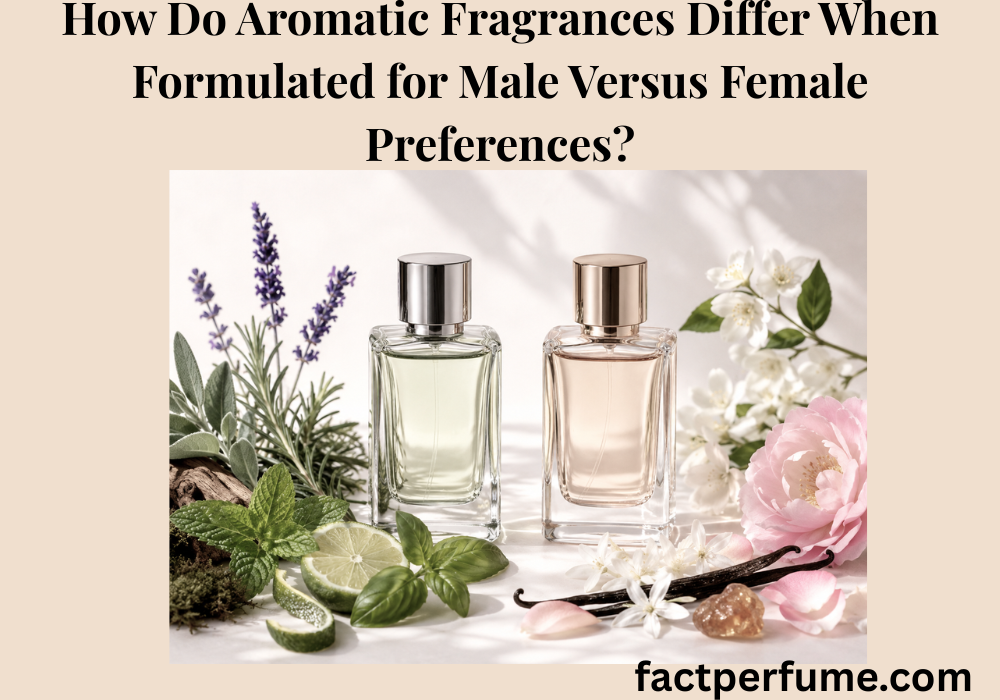
How Do Aromatic Fragrances Differ When Formulated for Male Versus Female Preferences?
Aromatic fragrances marketed to men and women often differ in the way their herbal notes are balanced with sweetness, florals, fruit, woods, moss, musk, spice, leather, or amber. These differences are recurring commercial conventions, not biological formulation rules. Lavender, rosemary, sage, mint, basil, geranium, citrus, woods, and spices can appear in fragrances marketed to any gender.
The final gender impression also depends on more than the scent formula. Product names, bottle design, advertising, retail placement, and repeated cultural associations can all influence whether a fragrance is perceived as masculine, feminine, neutral, or mixed. Personal preference remains separate from all of these factors: a commercial label cannot reliably predict who will enjoy wearing a fragrance.
Understanding Gender Coding in Aromatic Perfumery
Gender coding in aromatic perfumery is the combination of scent structure and commercial presentation that causes a fragrance to be interpreted as masculine, feminine, neutral, or somewhere between those categories.
To understand it accurately, four separate questions must be considered:
What does the fragrance smell like? This is the composition. It includes the aromatic core, supporting accords, sweetness, dryness, florals, fruit, woods, musk, moss, amber, leather, texture, projection, and dry-down.
Who is the brand targeting? This is market positioning. A fragrance may be sold as “for him,” “for her,” unisex, or without an explicit gender label.
How is the fragrance culturally interpreted? This is gender perception. A scent may be read as masculine-coded or feminine-coded because similar structures have appeared repeatedly in certain products, advertisements, and grooming traditions.
Does the individual enjoy wearing it? This is personal preference. It may agree with the market category, but it may also cross it completely.
These four layers influence one another, but they are not interchangeable. A fragrance can be female-marketed while containing a dry fougère structure traditionally associated with men. A male-marketed aromatic can contain florals, fruit, vanilla, powder, or soft musk. A gender-neutral perfume may still be perceived as masculine or feminine by some wearers.
The broader aromatic category includes fragrances built around herbs, lavender, green materials, spices, citrus, woods, and related effects. None of these materials is inherently restricted to one gender category.
Ingredients Do Not Carry Biological Gender
Fragrance ingredients acquire gender associations through historical use and cultural repetition rather than biology.
Lavender is a clear example. It has appeared in soaps, household products, floral perfumes, fougères, shaving products, women’s fragrances, men’s fragrances, and gender-neutral compositions. Its interpretation changes according to the materials surrounding it.
Lavender over dry moss, pepper, and cedar may feel different from lavender paired with orange blossom, vanilla, and soft musk. The lavender itself has not become male or female. The supporting structure has changed the fragrance’s balance, texture, and cultural reference points.
The same principle applies to vanilla, leather, tobacco, rose, fruit, woods, musk, and amber. These materials may carry familiar commercial associations, but they remain available to every area of perfumery.
Labels Can Affect Perception
The wording surrounding a fragrance can influence how consumers interpret it before or during smelling.
A label-perception study published in Frontiers in Psychology found that participants rated a scent as more feminine when it was presented with a feminine label than when the same scent was presented with a masculine label. However, the label did not establish complete control over fragrance preference, and the study’s limited population and design should not be treated as proof of a universal response.
The finding is important because it shows that a fragrance gender label may influence one part of perception without determining whether the wearer actually likes the scent.
Separate composition, market positioning, cultural perception, and personal preference before interpreting an aromatic fragrance as masculine, feminine, or gender-neutral.
Why Fougère Aromatics Became Strongly Associated With Men
Fougère became one of the most recognisable masculine-coded structures in Western commercial perfumery, but it was not created as a biological formula for men.
Houbigant credits perfumer Paul Parquet with creating Fougère Royale in 1882. The fragrance helped establish the fougère family and introduced a new way of combining aromatic freshness with warm, mossy, and woody effects. The Perfume Society also reports that the original Fougère Royale was created for women, even though the family later became strongly associated with men’s perfumery.
This change illustrates how fragrance categories can acquire new gender meanings over time.
A traditional fougère effect may involve combinations of lavender, citrus, geranium, herbs, coumarin-like warmth, woods, vetiver, patchouli, or mossy accords. These elements can create a fresh, green, dry, warm, soapy, earthy, or hay-like profile.
There is no single mandatory fougère formula. The detailed fougère structure has been interpreted in floral, woody, spicy, aquatic, sweet, soft, ambered, and modern abstract forms.
The Role of Grooming Traditions
Fougère became increasingly masculine-coded because similar structures were repeatedly used in men’s colognes, soaps, shaving products, aftershaves, and barbershop-style grooming.
Consumers therefore encountered lavender, herbs, coumarin-like warmth, moss, and woods within a strongly male retail and advertising environment. Repeated exposure connected the scent structure with ideas of male grooming.
That association became commercially powerful, but it did not transform the ingredients into male materials. Modern fougères can be marketed to men, women, or all wearers, and anyone may prefer their aromatic balance.
Common Tendencies in Male-Marketed Aromatic Fragrances
Male-marketed aromatic fragrances have historically placed greater emphasis on dry herbs, woods, moss, spices, leather, tobacco, aquatic freshness, and musks. These are recurring market tendencies rather than requirements.
A typical dry aromatic core may feature lavender, lavandin, rosemary, sage, mint, basil, tarragon, or geranium. Citrus may sharpen the opening, while a less sweet structure can make the herbal character feel crisp, clean, bitter, green, or traditionally groomed.
The dryness itself is a formula decision. It is not an inherently masculine quality.
Spicy, Woody, and Mossy Support
Black pepper, cardamom, nutmeg, clove, coriander, and other spices may add warmth, sharpness, dryness, or complexity.
Cedar, vetiver, patchouli, mossy accords, and dry woods can make the fragrance feel earthy, structured, smoky, bitter, or rooted. Their long history in men’s fragrances helps explain why these effects are often perceived as masculine-coded in Western markets.
However, the same materials also appear widely in women’s and gender-neutral fragrances. A woody or mossy base does not identify the intended wearer on its own.
Leather and Tobacco Accords
Leather and tobacco are often used to create darkness, smoke, dryness, warmth, bitterness, or sweetness.
A leather accord may smell like polished leather, soft suede, smoke, flowers, minerals, or animalic materials. Tobacco may appear dry and leafy, honeyed, spicy, fruity, smoky, or vanilla-like.
Neither accord automatically guarantees strong projection or long wear. A note name describes an olfactory impression, not a fixed technical function.
Male-Market Aromatics Are Not Always Dry
Modern male-marketed aromatics may also be floral, fruity, aquatic, sweet, transparent, musky, powdery, or softly woody.
Orange blossom, violet, jasmine, vanilla, tonka, clean musk, fruit, and amber can all appear prominently in products marketed to men. The masculine positioning may come from the full formula, name, bottle, campaign, and retail category rather than from one supposedly male ingredient.
Common Tendencies in Female-Marketed Aromatic Fragrances
Female-marketed aromatic fragrances often combine recognisable herbal materials with florals, fruit, vanilla, musk, amber, powdery effects, or soft woods.
The herbs do not need to be hidden. Lavender, sage, mint, rosemary, basil, tea, and other aromatic notes can remain central and clearly identifiable.
Aromatic and Floral Contrast
Orange blossom, jasmine, rose, tuberose, neroli, iris, and violet may be used to create contrast with the aromatic core.
Orange blossom can make lavender feel radiant and floral. Iris may add powder or cool dryness. Jasmine can add brightness, richness, or diffusion. Rose may introduce freshness, spice, fruitiness, or depth depending on how it is constructed.
These florals do not automatically “feminise” a male ingredient. Instead, they alter the complete scent architecture.
Sweetness, Warmth, and Soft Texture
Vanilla, tonka, musk, amber, benzoin, resins, and soft woods may provide warmth, creaminess, sweetness, powder, softness, or depth.
Vanilla is frequently feminine-coded in commercial advertising, but it is not a female ingredient. It appears in men’s tobacco fragrances, woody scents, leathers, fougères, ambers, gourmands, and gender-neutral perfumes.
The same is true of musk and amber. Their gender impression depends on how they interact with the rest of the formula.
Fruit as a Supporting Effect
Pear, mandarin, peach, berries, blackcurrant, citrus, and other fruit effects may add brightness, tartness, juiciness, transparency, or sweetness.
Fruit can make an aromatic fragrance feel crisp and green, dark and rich, or light and sparkling. These materials are common across male-, female-, and gender-neutral perfumery.
A Documented Example: YSL Libre
YSL Libre is officially positioned as a women’s fragrance. Its structure combines French lavender with Moroccan orange blossom, musk, and warm vanilla.
The brand deliberately presents Libre as a contrast between a traditionally masculine-coded lavender fougère idea and a feminine-coded floral heart. This is an example of one brand using historical gender symbolism inside a modern female-market perfume.
Libre does not represent a universal formula for women. Its importance lies in showing that a strongly recognisable aromatic material can remain central within a female-marketed fragrance.
The Main Differences at a Glance
| Market Positioning | Common Aromatic Direction | Frequent Supporting Effects |
|---|---|---|
| Male-marketed | Dry, herbal, fresh, mossy, spicy, woody | Cedar, vetiver, moss, leather, tobacco, aquatics, musk |
| Female-marketed | Floral-aromatic, fruity-aromatic, sweet, warm, contrasting | Orange blossom, jasmine, fruit, vanilla, amber, musk, soft woods |
| Gender-neutral | Any aromatic direction | Any floral, woody, fruity, sweet, leathery, musky, green, or amber support |
This comparison describes recurring commercial patterns. It does not divide perfumery into three fixed ingredient systems.
Compare recurring commercial tendencies without treating dry woods, florals, fruit, sweetness, leather, moss, or musk as ingredients reserved for one gender.
How Marketing Shapes Fragrance Gender Perception
A consumer may begin forming an opinion about a fragrance before smelling it.
Names, colours, bottle shapes, typography, campaign images, product descriptions, and retail categories all create expectations. These non-olfactory signals can make the same scent structure seem more masculine, feminine, luxurious, sporty, sensual, youthful, or neutral.
Product Names and Language
Names containing words such as “Homme,” “Femme,” “Gentleman,” or “Lady” immediately suggest an intended audience.
Descriptions can also frame the experience through words such as:
- rugged;
- powerful;
- bold;
- dark;
- luminous;
- delicate;
- sensual;
- soft;
- clean;
- intense.
These words direct attention toward particular qualities. “Rugged” may encourage the wearer to notice wood, smoke, dryness, or leather. “Luminous” may highlight citrus, florals, freshness, or transparency.
The wording does not alter the fragrance formula, but it may change the way the formula is interpreted.
Bottle and Packaging Design
Packaging may communicate gender through shape, colour, typography, weight, finish, ornamentation, cap design, and photography.
Angular bottles, dark colours, heavy caps, and minimal decoration have often appeared in male-market fragrance. Curved forms, lighter colours, decorative details, and jewellery-like elements have often appeared in female-market presentation.
These patterns are neither permanent nor universal. A dark bottle is not automatically masculine, a rounded bottle is not automatically feminine, and minimalist packaging is not automatically unisex.
The meaning comes from the complete visual system and the cultural context in which it appears.
Advertising and Campaign Narratives
Advertising may connect a perfume with strength, freedom, sensuality, rebellion, elegance, tenderness, sport, nightlife, or nature.
Model selection, clothing, movement, music, lighting, setting, and campaign language all help frame the expected identity of the wearer.
Advertising can influence expectation, but it does not determine every consumer’s response. A viewer may interpret the same campaign differently or enjoy the fragrance for reasons unrelated to the advertised narrative.
Retail Placement
Placement in a men’s, women’s, unisex, niche, or grooming section reinforces commercial categorisation.
This makes shopping easier, but it may also prevent consumers from testing fragrances that suit their actual preferences. Someone who enjoys dry herbs, moss, or woods may find an ideal fragrance in the men’s section regardless of identity. Someone who prefers florals, fruit, vanilla, or softness may find a better match in the women’s section.
The relationship between formula and commercial framing can also be seen in the way green perfumes are marketed. Similar green materials can be presented through very different packaging, language, and supporting accords.
How Modern Aromatic Fragrances Move Beyond Traditional Gender Categories
Modern aromatic perfumery increasingly offers fragrances without exclusive gender targeting.
Some brands describe scent through material, landscape, place, memory, atmosphere, or mood rather than presenting an ideal male or female wearer. A fragrance may be introduced as crushed herbs, mineral woods, green tea, smoke, warm skin, or a Mediterranean garden.
This approach shifts attention toward the scent experience itself.
Combining Traditional Gender Codes
Modern fragrances may deliberately combine effects once placed in opposite commercial categories:
- lavender with orange blossom;
- leather with rose;
- smoke with vanilla;
- fruit with moss;
- woods with white florals;
- herbs with gourmand sweetness.
These compositions do not always remove gender associations. Instead, they combine and complicate them.
One wearer may interpret leather and rose as masculine, another as feminine, and another as balanced or neutral. Perception depends on formula, context, and personal experience.
Gender-Neutral Does Not Mean Ingredient-Neutral
A gender-neutral aromatic fragrance may contain vanilla, tobacco, leather, rose, jasmine, woods, moss, fruit, florals, gourmand accords, musk, or amber.
There is no prohibited ingredient list for unisex perfume.
Gender-neutral usually describes how the brand positions the fragrance rather than a scientifically neutral scent structure. A unisex product may still feel strongly masculine-coded or feminine-coded to an individual wearer.
Botanical realism, transparent woods, clean musks, mineral effects, and minimalist packaging are common modern strategies, but none of them is required.
How to Evaluate an Aromatic Fragrance Beyond Its Gender Label
The most useful evaluation begins with the scent rather than the commercial category.
When practical, smell the fragrance before reading its marketing description. Identify the aromatic core and observe whether lavender, rosemary, sage, mint, basil, geranium, tea, or mixed herbs remain noticeable.
Next, examine the opening. Notice citrus, fruit, spice, green effects, aquatic freshness, or camphoraceous sharpness.
As the fragrance develops, observe whether florals, sweetness, fruit, powder, spice, woods, moss, musk, vanilla, leather, tobacco, or amber become more prominent.
The later-developing woody, musky, mossy, ambered, sweet, leathery, or resinous effects form the base structure. This part of the fragrance shapes the dry-down, but it does not independently determine perceived gender.
A complete evaluation of composition and longevity should consider the interaction of the full formula rather than assuming that woods, leather, tobacco, or base notes automatically guarantee performance.
Evaluate the aromatic core, supporting accords, dry-down, and personal use before comparing your impression with the product’s gender label or marketing presentation.
Use Descriptive Contrasts
Instead of asking whether a fragrance smells male or female, consider whether it feels:
- dry or sweet;
- sharp or soft;
- dense or transparent;
- floral or mossy;
- warm or cool;
- smooth or medicinal;
- smoky or clean;
- traditional or contemporary.
These descriptions provide more useful information about personal fit.
A Short Label-Free Checklist
Before deciding, ask:
0 of 6 completed
After testing, compare your impression with the official name, packaging, campaign, and retail category. Notice whether the marketing changed the way you interpreted the fragrance.
Frequently Asked Questions
No. Lavender, rosemary, sage, mint, basil, geranium, citrus, woods, vanilla, leather, florals, fruit, musk, and amber can appear in fragrances marketed to any gender. Their gender associations come from formula balance, historical use, and commercial presentation rather than biology.
Fougère structures became strongly associated with men because lavender, herbs, coumarin-like warmth, moss, and woods were repeatedly used in men’s colognes, aftershaves, soaps, and barbershop-style grooming. The association is historical and commercial, not a restriction on who may wear the style.
Yes. A male-market label describes the audience targeted by the brand, not who is allowed to enjoy the fragrance. The useful questions are whether the opening, supporting accords, dry-down, projection, and normal use fit the individual wearer.
Yes. Florals, fruit, vanilla, powder, amber, and soft musk are common in male-, female-, and gender-neutral fragrances. Their effect depends on the complete composition rather than a single note or retail category.
No. Gender-neutral usually describes market positioning. A unisex aromatic may contain leather, vanilla, rose, tobacco, woods, moss, fruit, florals, gourmand effects, musk, or amber and may still be perceived differently by individual wearers.
Smell the aromatic opening, identify the supporting florals, fruit, sweetness, woods, moss, musk, leather, or amber, and evaluate the complete dry-down. Then decide whether the texture, projection, setting fit, and regular wear value suit you without relying on the bottle or category label.
Choosing Aromatic Fragrance Beyond Gender Labels
Aromatic materials do not inherently belong to men or women. Their perceived gender emerges from formula balance, historical repetition, commercial presentation, and individual interpretation.
Male-marketed aromatics have often emphasised dry herbs, woods, moss, spices, leather, tobacco, aquatics, and musk. Female-marketed aromatics have often combined explicit herbs with florals, fruit, vanilla, amber, musk, sweetness, or soft woods. These structures overlap, and none of their materials is biologically gendered.
The most reliable choice comes from smelling the fragrance, understanding its complete structure, observing the dry-down, and comparing products across commercial categories. Market positioning explains who the brand targets, but personal preference determines whether the fragrance belongs in someone’s collection.