
Which Aromatic Perfumes Evoke Crisp, Green Freshness?
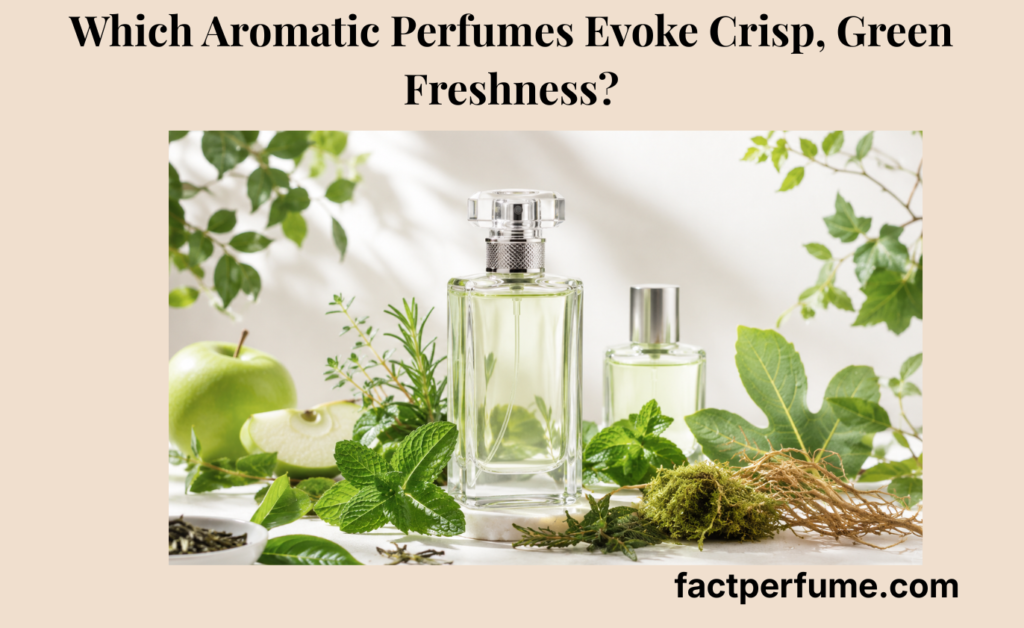
The clearest crisp green aromatic perfumes combine recognisable botanical effects—such as mint, galbanum, herbs, vetiver, ivy, or moss—with a distinctly aromatic fragrance structure. Creed Green Irish Tweed Eau de Parfum, Guerlain Aqua Allegoria Herba Fresca Eau de Toilette, and Amouage Beach Hut Man Eau de Parfum are the strongest core aromatic-green examples in this selection. Green apple, fig-tree, and orchard fragrances provide useful comparisons without automatically belonging to the aromatic core.
This guide separates core aromatic-green perfumes from adjacent green styles, explains the notes behind each profile, and helps you choose two or three contrasting samples. It compares polished peppermint and oakmoss, mint with green tea, dense ivy and moss, green apple with petitgrain, fig-tree greenness, and delicate orchard freshness. The fragrances are organised by profile role rather than ranked from best to worst.
What Makes a Perfume Aromatic-Green Rather Than Simply Fresh or Green?
An aromatic-green perfume combines herbs, mint, lavender, geranium, vetiver, woods, moss, or related aromatic materials with a recognisable leafy, grassy, vegetal, bitter-green, or botanical effect.
“Aromatic-green” is best understood here as an editorial cross-facet description rather than one universally standardised official perfume family. Brands, retailers, databases, and fragrance writers may organise overlapping perfumes differently. A perfume can therefore smell aromatic and green without every source giving it the same formal classification.
This article uses three product roles to keep those distinctions clear:
- Core aromatic-green: Aromatic structure and botanical greenness are both central to the perfume.
- Aromatic-adjacent green: Green freshness includes aromatic support, but the official positioning does not clearly place the perfume within an aromatic family.
- Green comparison benchmark: The perfume demonstrates another useful form of greenness without being presented as a core aromatic perfume.
Citrus Freshness Is Not Automatically Aromatic-Green
Citrus can brighten mint, petitgrain, herbs, grass, or leafy accords. However, citrus peel, juice, or zest alone does not create an aromatic-green structure.
Greenley is useful at this boundary because green apple, citrus, and petitgrain create crisp freshness supported by woods. Its greenness is fruit-led rather than centred on mint, galbanum, moss, ivy, or strongly recognisable herbs.
Aquatic and Blue Freshness Are Different
Aquatic perfumes may emphasise marine, ozonic, salty, watery, melon-like, or clean-air effects. These impressions can feel highly refreshing without suggesting leaves, grass, roots, herbs, stems, or moss.
A blue bottle, green liquid, botanical name, or “fresh” marketing description should not be treated as proof that a perfume belongs to the aromatic-green core.
Herbaceous Does Not Always Mean Crisp and Green
A herbaceous perfume may feature rosemary, thyme, sage, basil, lavender, mint, or related effects. Its final character can still feel warm, savoury, spicy, medicinal, camphoraceous, or dry rather than crisp and botanical.
For this page, the aromatic materials must support a recognisable green texture. Herba Fresca achieves this through spearmint, fresh herbs, green tea, and grass imagery. Beach Hut Man creates a darker version through mint, galbanum, vetiver, ivy, moss, and woods.
Fougère and Chypre Are Broader Structures
Fougère and chypre describe broader compositional traditions that may overlap with aromatic-green perfumery. Fougères often combine aromatic herbs with floral, woody, mossy, or coumarinic effects. Green chypres may combine bitter foliage, florals, moss, woods, or resinous materials.
Creed officially presents Green Irish Tweed as a precision-crafted fougère that combines fresh and aromatic notes, including bergamot, lemon, peppermint, geranium, lavender, oakmoss, and woods. It fits the core group without proving that every fougère is crisp green or that every aromatic-green perfume is a fougère.
Fruity and Fig-Tree Greenness Sit Near the Boundary
Green apple can evoke tart fruit skin, crisp juice, and fresh wood. Fig leaves and sap can suggest milky vegetation, bark, shade, and sun-warmed botanical matter. Orchard fragrances can use fruit-tree and garden imagery to create delicate green freshness.
These profiles may smell clearly green, while broader green perfumes may rely less on a recognisable herbal-aromatic structure. They are valuable comparison tools because they help a reader discover whether the preferred greenness is herbal, mossy, fruity, woody, milky, or vegetal.
| Profile | Main Freshness Source | Aromatic-Green Status | Example Role |
|---|---|---|---|
| Mint, galbanum, herbs, vetiver, ivy, or moss | Aromatic materials plus botanical greenness | Core | Green Irish Tweed, Herba Fresca, Beach Hut Man |
| Green apple, petitgrain, citrus, and woods | Fruity greenness with aromatic support | Adjacent | Greenley |
| Fig leaves, sap, bark, and tree wood | Fig-tree greenness | Benchmark | Philosykos |
| Apple tree, pear tree, and garden vegetation | Fruity-vegetal orchard freshness | Benchmark | Un Jardin Sur Le Toit |
| Marine, ozonic, salty, or watery effects | Aquatic freshness | Outside this page | Better compared with aquatic perfumes |
| Citrus peel without leafy or herbal support | Citrus freshness | Outside this page | Better compared with citrus perfumes |
This boundary matrix is a practical selection tool rather than a universal perfume taxonomy.
Which Notes and Accords Create Crisp Green Aromatic Effects?
Crisp green aromatic effects are commonly associated with bitter stems, cooling-smelling herbs, leafy citrus, grassy roots, transparent tea, ivy, moss, and other botanical impressions.
A note list communicates the effects a brand wants the wearer to notice. It is not a complete formula, an ingredient declaration, or an exact timetable showing when each material will appear or disappear.
Galbanum
Galbanum is commonly associated with bitter, resinous, stem-like, leafy, and sometimes pea-pod-like greenness. Its effect changes with dose and context.
Within a bright formula, galbanum may resemble freshly broken stems. Combined with moss and woods, it may feel darker, drier, or more polished. Beach Hut Man officially lists galbanum, where it appears beside mint, ivy, moss, vetiver, patchouli, myrrh, and dry woods to create a darker green pathway.
Mint and Spearmint
Mint-associated materials and accords can smell brisk, icy, herbal, crushed-leaf-like, sweet-green, or medicinal. This is an olfactory association rather than literal cooling of the skin.
Peppermint contributes to Green Irish Tweed’s brisk aromatic opening. Spearmint supports the transparent herbal style of Herba Fresca, while mint forms part of the denser green architecture of Beach Hut Man. The note name alone does not predict which version a wearer will prefer.
Petitgrain
Petitgrain commonly occupies the space between citrus and foliage. It can smell leafy, woody, dry, bitter-citrus, or lightly floral rather than resembling citrus juice alone.
In Greenley, petitgrain follows bergamot, mandarin, and green apple before the fragrance moves toward ambrox, amberwood, and cedarwood. It helps connect fruit freshness to woody-green territory without making the perfume identical to a mint-, galbanum-, or moss-led aromatic.
Vetiver
Vetiver may smell grassy, rooty, woody, earthy, dry, smoky, or mineral. It is not uniformly crisp or green.
In Beach Hut Man, vetiver appears alongside moss and ivy leaves, helping create a shaded and structured profile. In another formula, vetiver might move closer to smoke, soil, dry wood, or mineral effects.
Fig Leaf and Sap
Fig leaves and sap can suggest leafy vegetation, milky fluidity, dustiness, bark, or sun-warmed botanical matter. These effects are green but not automatically aromatic.
Diptyque presents Philosykos Eau de Parfum through fig leaves, fig-tree sap, fig-tree wood, black pepper, and a white-cedar emphasis that strengthens the impression of the tree and its bark.
Ivy and Moss
Ivy and moss can evoke shaded foliage, humid woodland, bark, earth, or dense forest structure. They usually create darker greenness than green tea, fruit skin, or transparent mint.
Beach Hut Man combines ivy and moss with mint, galbanum, vetiver, patchouli, myrrh, and dry woods. Green Irish Tweed uses oakmoss beneath aromatic florals and woods for a more polished style.
Green Apple
Green apple commonly suggests tart juice, crisp fruit skin, sweetness, and lively freshness. It usually reads fruitier than bitter galbanum, shaded ivy, or dry moss.
Its dominant role in Greenley makes that fragrance a useful starting point for readers moving from citrus or fruit-focused perfumes toward greener styles.
Green Tea Accord
A green tea accord may feel transparent, softly bitter, airy, calm, or herbal. Because it is an accord, the name does not prove that literal tea extract is present.
Herba Fresca uses a green tea accord with fresh herbs, spearmint leaves, dew, and spring-flower imagery.
| Note or Accord | Common Impression | Possible Variation | Aromatic Role | Best-Fit Preference |
|---|---|---|---|---|
| Galbanum | Bitter stems, sap, crushed leaves | Resinous, mossy, polished | Sharpens botanical structure | Bitter or classical greenness |
| Mint or spearmint | Brisk, icy-smelling, herbal | Sweet-green, medicinal, airy | Creates aromatic lift | Mint-led freshness |
| Petitgrain | Leafy citrus, twigs, dry wood | Bitter, floral, soft | Connects citrus with foliage | Citrus-leaf greenness |
| Vetiver | Grass, roots, earth, dry wood | Smoky, mineral, woody | Adds dry botanical depth | Rooty or structured green |
| Fig leaf and sap | Leafy, milky, vegetal | Dusty, creamy, woody | Green benchmark rather than automatic aromatic core | Fig-tree atmosphere |
| Ivy | Shaded leaves and dense foliage | Damp, woody, dark | Deepens botanical greenness | Dark leafy profiles |
| Moss or oakmoss | Forest floor and dry woodland | Earthy, woody, polished | Anchors aromatic structure | Mossy greenness |
| Green apple | Tart fruit skin and crisp juice | Sweet, bright, woody-clean | Adds fruity-green freshness | Accessible modern green |
| Green tea accord | Transparent, softly bitter, airy | Floral, watery, herbal | Lightens aromatic greenness | Airy tea-like profiles |
How Should These Perfumes Be Evaluated Before Sampling?
These perfumes should be evaluated by classification role, official note basis, green texture, opening-to-dry-down development, performance comfort, setting fit, and the limitation each sample reveals.
1. Confirm the Product’s Role
Determine whether the perfume is included as:
- a core aromatic-green example;
- an aromatic-adjacent green option;
- a green comparison benchmark.
This prevents a useful sensory comparison from being misrepresented as formal fragrance-family classification.
2. Verify the Official Product Facts
Confirm the exact:
- product name;
- concentration;
- official note disclosure;
- official description;
- formal classification when the brand supplies one.
The official page controls those factual details. Sensory phrases such as polished, shaded, creamy, restrained, airy, traditional, or assertive remain editorial interpretations that must be confirmed through smelling.
3. Identify the Dominant Green Texture
For this comparison, the six fragrances represent:
- polished peppermint and oakmoss;
- transparent herbs and green tea;
- dense mint, ivy, and moss;
- fruity green apple and petitgrain;
- fig leaves, sap, and tree wood;
- delicate orchard vegetation.
The goal is not to decide which texture is objectively superior. It is to recognise which pathway deserves a place in the reader’s sampling shortlist.
4. Separate the Opening From the Dry-Down
A perfume that begins with mint, citrus, tea, apple, galbanum, or leaves may later become:
- woody;
- mossy;
- resinous;
- fruitier;
- creamier;
- softer;
- musky;
- less recognisably green.
The opening can create attraction, but the later development usually determines whether a full bottle fits the wearer’s preferences.
5. Treat Performance as a Wear-Test Result
Concentration does not independently determine exact longevity, projection, or suitability. An Eau de Parfum does not automatically outperform every Eau de Toilette because unrelated perfumes use different formulas, materials, balances, and carrier systems.
Performance statements should therefore describe what happened during a controlled test of the exact version, not what a concentration label supposedly guarantees.
6. Evaluate Contextual Comfort
Test how the fragrance behaves in:
- warm conditions;
- cooler conditions;
- open air;
- shared spaces;
- casual daytime settings;
- more polished daytime settings.
Application amount, ventilation, proximity, personal sensitivity, and surrounding expectations matter more than a universal seasonal or workplace label.
7. Identify One Advantage and One Limitation
Every product needs a clear reason to sample it and a clear reason it might not fit.
A limitation does not mean poor quality. It identifies the preference boundary that should be examined during wear testing.
The six perfumes below are organised by role and sensory contrast, not ranked from best to worst.
Which Aromatic-Green Perfumes and Green Comparison Benchmarks Are Worth Sampling?
Green Irish Tweed, Herba Fresca, and Beach Hut Man provide the clearest aromatic-green examples in this selection, while Greenley, Philosykos, and Un Jardin Sur Le Toit clarify how fruity, fig-tree, and orchard greenness differ from the aromatic core.
These products are not universally superior to other green fragrances. Their usefulness comes from the contrasting profile pathways they allow a reader to compare.
Creed Green Irish Tweed Eau de Parfum — Core Polished Peppermint-Oakmoss Aromatic
Creed Green Irish Tweed Eau de Parfum is the clearest polished aromatic-green example in this set because its fougère structure combines citrus, peppermint, geranium, lavender, oakmoss, and woods.
Creed currently describes an opening of bergamot, lemon, and peppermint, followed by geranium and lavender over an oakmoss-and-woods base.
Role in this article: Core aromatic-green.
Editorial profile to verify: The perfume may feel cool, polished, mossy, tailored, and structurally traditional. Peppermint and citrus can provide briskness, while geranium, lavender, oakmoss, and woods may create a composed dry-down rather than literal garden vegetation.
Main advantage: It demonstrates a clear transition from crisp aromatics into mossy woods.
Main limitation: Readers accustomed to transparent tea, juicy fruit, or informal garden fragrances may find it more traditional or controlled.
Who should sample it: Someone drawn to bergamot, lemon, peppermint, geranium, lavender, oakmoss, woods, or polished fougère styling.
What wear testing must confirm: Whether the later development remains recognisably green or becomes primarily woody and mossy for the individual wearer.
Guerlain Aqua Allegoria Herba Fresca Eau de Toilette — Core Herbal-Tea Aromatic Green
Guerlain Aqua Allegoria Herba Fresca Eau de Toilette represents the lightest core aromatic-green direction through fresh herbs, spearmint leaves, green tea, dew, spring flowers, and cut-grass imagery.
Guerlain officially describes fresh herbs sparkling with dew and spring flowers, energised by spearmint leaves and connected by a green tea accord.
Role in this article: Core aromatic-green.
Editorial profile to verify: Herba Fresca may feel transparent, minty, dewy, relaxed, airy, and bright. Its greenness is closer to freshly watered herbs, tea, and grass than to moss, resin, patchouli, or dark wood.
Main advantage: It provides a clear sampling reference for cool spearmint, transparent herbs, and tea-like greenness.
Main limitation: It may feel too light or insufficiently structured for readers who prefer moss, dark woods, resins, or dense patchouli.
Who should sample it: Someone interested in spearmint, green tea, cut-grass effects, relaxed daytime fragrance, or a low-density green style.
What wear testing must confirm: How much of the herbal-green identity remains after the initial freshness develops, without assuming that the Eau de Toilette label predicts fixed wear time.
Amouage Beach Hut Man Eau de Parfum — Core Dense Mint, Ivy, and Moss Aromatic
Amouage Beach Hut Man Eau de Parfum creates the densest core aromatic-green profile through mint, galbanum, vetiver, ivy, moss, patchouli, myrrh, and dry woods.
Amouage officially lists mint, orange blossom, and galbanum at the top; vetiver, moss, and ivy leaves in the heart; and patchouli, myrrh, and dry woods in the base.
Role in this article: Core aromatic-green.
Editorial profile to verify: The perfume may feel bitter-green, shaded, mossy, woody, dry, and assertive. Mint supplies contrast, while ivy, moss, vetiver, patchouli, myrrh, and woods can create a darker and more substantial development.
Main advantage: It provides the strongest contrast to Herba Fresca’s transparent style and Greenley’s fruit-led freshness.
Main limitation: Its density may feel excessive in restrained shared spaces or to readers who prefer delicate greenery.
Who should sample it: Someone drawn to ivy, moss, galbanum, vetiver, dry woods, myrrh, or expressive dark-green fragrances.
What wear testing must confirm: Whether its diffusion remains comfortable in the intended environment and whether the woody-resinous dry-down supports or overwhelms the preferred green character.
Parfums de Marly Greenley Eau de Parfum — Aromatic-Adjacent Fruity Green
Parfums de Marly Greenley Eau de Parfum is an aromatic-adjacent fruity-green option built around green apple, citrus, petitgrain, amberwood, ambrox, and cedarwood.
The current official olfactory pyramid lists bergamot, mandarin, and green apple at the top; petitgrain in the heart; and ambrox, amberwood, and cedarwood in the base.
Role in this article: Aromatic-adjacent fruity green. This is an editorial role based on its profile, not a claim that the brand formally classifies it as a core aromatic perfume.
Editorial profile to verify: Greenley may feel crisp, juicy, bright, contemporary, fruit-led, and woody-clean. Green apple creates the main freshness, while petitgrain helps connect the fruit and citrus to leafy and woody territory.
Main advantage: It offers an accessible route from citrus or fruit-centred fragrances into greener profiles.
Main limitation: Readers seeking bitter stems, crushed herbs, ivy, tea, galbanum, or moss may find it less leafy and less aromatic than the core examples.
Who should sample it: Someone interested in green apple, petitgrain, modern freshness, casual wear, or fruit-forward greenness.
What wear testing must confirm: Whether the green apple and petitgrain remain central or whether the later fragrance becomes mainly amberwood, cedarwood, and ambrox.
Diptyque Philosykos Eau de Parfum — Fig-Tree Green Benchmark
Diptyque Philosykos Eau de Parfum acts as a fig-tree green benchmark through leaves, sap, wood, black pepper, and cedar-emphasised bark rather than a conventionally herb-led aromatic structure.
Diptyque officially lists fig leaves, fig-tree sap, fig-tree wood, and black pepper. Its description explains that white cedar strengthens the woody impression of the tree and its bark in the Eau de Parfum.
Role in this article: Green comparison benchmark.
Editorial profile to verify: Philosykos may feel leafy, sap-like, milky, woody, soft, dusty, or sun-warmed. Its green character represents the wider impression of a fig tree rather than a cluster of mint, lavender, galbanum, or mossy aromatics.
Main advantage: It demonstrates that botanical greenness can feel vivid without relying on a recognisably herb-led aromatic structure.
Main limitation: Its milky and woody development may feel too soft or creamy for readers seeking crisp mint, bitter herbs, or sharp galbanum.
Who should sample it: Someone drawn to fig leaves, sap, bark, cedar, soft greenery, or a complete tree-like atmosphere.
What wear testing must confirm: Whether the leafy impression remains important or the dry-down becomes predominantly milky, woody, and cedar-led.
Hermès Un Jardin Sur Le Toit Eau de Toilette — Fruity-Vegetal Orchard Benchmark
Hermès Un Jardin Sur Le Toit Eau de Toilette acts as a fruity-vegetal benchmark through crisp apple-tree and juicy pear-tree impressions rather than a clearly herbaceous aromatic structure.
Hermès officially describes the fragrance as fruity and vegetal, with crisp apple-tree and juicy pear-tree effects.
Role in this article: Green comparison benchmark.
Editorial profile to verify: The fragrance may feel airy, delicate, orchard-like, fruity-vegetal, understated, and garden-inspired. Its greenness comes from fruit trees and vegetation rather than mint, galbanum, moss, or prominently recognisable herbs.
Main advantage: It clearly demonstrates the difference between delicate orchard freshness and structured aromatic greenness.
Main limitation: It may not provide enough bitterness, herbaceousness, moss, or density for someone seeking a forceful aromatic-green profile.
Who should sample it: Someone interested in apple and pear trees, delicate daytime fragrance, understated gardens, or low-density vegetal freshness.
What wear testing must confirm: Whether the vegetal effect remains noticeable after the initial fruit-tree freshness softens.
The official-note drivers in the following matrix are based on the current brand pages cited in the six evaluations above. Expected textures are editorial hypotheses that require direct testing.
| Product and Concentration | Role in This Page | Official Green Drivers | Expected Green Texture | Dry-Down Question to Test | Best Sampling Reason | Limitation to Test |
|---|---|---|---|---|---|---|
| Green Irish Tweed EDP | Core aromatic-green | Bergamot, lemon, peppermint, geranium, lavender, oakmoss, woods | Polished peppermint and oakmoss | Does it remain green or become mainly woody? | Formal aromatic reference | Traditional character |
| Herba Fresca EDT | Core aromatic-green | Herbs, spearmint, green tea, cut-grass imagery | Transparent herbal tea | Does its herbal-green identity remain recognisable? | Light mint-and-tea reference | Limited density |
| Beach Hut Man EDP | Core aromatic-green | Mint, galbanum, vetiver, ivy, moss | Dense shaded green | Do the woods and resins overpower the freshness? | Strong dark-green contrast | Shared-space intensity |
| Greenley EDP | Aromatic-adjacent | Green apple, petitgrain, citrus, woods | Fruity crisp green | Does it become mainly woody and ambery? | Modern fruity-green reference | Less leafy or herbal |
| Philosykos EDP | Green benchmark | Fig leaves, sap, tree wood | Milky fig-tree green | Does cedar dominate the later development? | Botanical tree comparison | Less aromatic |
| Un Jardin Sur Le Toit EDT | Green benchmark | Apple tree, pear tree, vegetal character | Delicate orchard green | Does the vegetal effect remain noticeable? | Soft orchard comparison | Limited aromatic structure |
How Does Aromatic-Green Freshness Change During the Dry-Down?
Aromatic-green freshness may become softer, woodier, mossier, fruitier, creamier, or more resinous as the complete formula develops beyond its opening.
For a broader explanation of how supporting materials and formula structure shape wear, review composition and longevity.
Three different questions should guide the evaluation:
- How long is the complete perfume detectable?
- How long does the original green impression remain recognisable?
- What replaces or supports that green impression?
These questions prevent total longevity from being confused with the persistence of mint, tea, apple, galbanum, fig leaves, or another opening effect. A perfume may remain detectable after its original crispness has softened into woods, moss, amber materials, resins, musk, or creamy tree notes.
Perfume develops as an integrated formula. Notes do not follow isolated clocks, and base materials do not preserve every opening effect unchanged. A note pyramid communicates intended impressions and transitions, but it is not a complete ingredient list or an exact timeline.
Formula composition, molecular properties, dose, spray distribution, skin surface, clothing, temperature, humidity, airflow, perception, and olfactory adaptation may all influence the wear experience. 2025 evaporation study found that molecular characteristics and measured skin properties both contributed to variation, supporting a multi-factor explanation rather than a skin-pH-only rule.
controlled evaporation study for examining fragrance evaporation after application to skin and model surfaces. Such research helps explain why paper and skin testing may differ, but it cannot predict exact wear time for any of the six perfumes in this article.
When testing a fragrance, record:
- the opening;
- the first clear transition;
- the mid-wear character;
- the later dry-down;
- whether a green impression remains;
- whether the scent becomes woody, mossy, fruity, creamy, resinous, or musky;
- how noticeable it feels around the application area;
- whether its projection remains comfortable.
Reduced self-detection does not always prove that a perfume has disappeared. Olfactory adaptation can reduce awareness after continued exposure, which is another reason not to judge performance from repeated close smelling alone.
How Should the Options Be Matched to Climate and Setting?
Climate and setting should be matched to fragrance density, sweetness, bitterness, diffusion, dry-down, and application amount rather than to rigid seasonal labels.
Transparent Warm-Weather Greenness
Herba Fresca, Greenley, and Un Jardin Sur Le Toit are useful starting samples when the goal is a lighter or more transparent form of freshness.
Herba Fresca explores mint, herbs, tea, and grass imagery. Greenley is brighter and fruitier through citrus, green apple, and petitgrain. Un Jardin Sur Le Toit offers softer orchard vegetation.
Warmth may alter evaporation and perceived diffusion, but it does not guarantee that every perfume will perform better. Test the actual fragrance and dose in conditions resembling intended wear.
Polished Daytime Aromatics
Green Irish Tweed is the most direct starting point for someone who wants a composed fougère profile built around bergamot, lemon, peppermint, geranium, lavender, oakmoss, and woods.
Its polished character may suit structured daytime settings, but no perfume is universally appropriate for every office or shared environment. Application amount, ventilation, proximity, workplace expectations, and individual sensitivity remain important.
Darker or More Assertive Greenness
Beach Hut Man is the strongest contrast when the goal is mint, ivy, moss, vetiver, galbanum, patchouli, myrrh, and woods.
It should be tested in both open-air and shared-space conditions. A fragrance that feels expressive outdoors may become excessive at close range when the application amount is not adjusted.
Soft Botanical Greenness
Philosykos is a better candidate for readers who want leaves, sap, bark, and tree wood rather than crisp herbs.
Its development may become creamier and woodier, so it should not be selected from the fig-leaf impression alone.
Shared Spaces
Before using any fragrance in offices, classrooms, meetings, public transport, or other close environments, evaluate:
- application amount;
- ventilation and airflow;
- distance from other people;
- early diffusion;
- dry-down density;
- workplace or venue expectations;
- wearer and colleague sensitivity.
No featured product should be described as universally office-safe or inoffensive.
Cooler Conditions
Moss, woods, vetiver, patchouli, myrrh, cedar, amberwood, and similar supporting effects may provide greater perceived structural weight in cooler conditions.
That does not restrict lighter fragrances to warm weather or heavier fragrances to cold weather. Direct testing and personal comfort remain more useful than fixed seasonal rules.
How Should You Sample These Perfumes Before Buying?
The most reliable low-risk approach is to compare two or three contrasting profiles on paper and skin, evaluate each dry-down, and delay a bottle decision until the complete wear experience fits the intended setting.
Step 1: Choose Contrasting Roles
For an aromatic-focused shortlist, sample:
- Green Irish Tweed;
- Herba Fresca;
- Beach Hut Man.
This compares polished mint and moss, transparent herbs and tea, and dense ivy-and-woods greenness.
For a broad green comparison, sample:
- Green Irish Tweed;
- Greenley;
- Philosykos.
This compares aromatic structure, fruity greenness, and fig-tree vegetation.
For a lighter comparison, sample:
- Herba Fresca;
- Greenley;
- Un Jardin Sur Le Toit.
This compares mint and tea, green apple and petitgrain, and delicate orchard vegetation.
Avoid testing all six simultaneously on skin. Too many fragrances make transitions and dry-downs difficult to track.
Step 2: Verify the Exact Version
Confirm:
- complete product name;
- Eau de Toilette or Eau de Parfum;
- sample or bottle label;
- current official product page;
- flanker status;
- whether the sample represents the intended version.
This is especially important for Philosykos because both Eau de Toilette and Eau de Parfum versions exist and should not be treated as interchangeable.
Step 3: Screen the Options on Paper
Use labelled blotters to compare openings and remove immediate dislikes.
Record:
- application time;
- dominant first impression;
- mint, citrus, fruit, herbs, tea, galbanum, moss, fig, or orchard character;
- sweetness;
- bitterness;
- density;
- immediate discomfort.
Paper is useful for initial comparison, but it should not make the final decision.
Step 4: Test the Finalists on Skin
Test one or two fragrances at a time. Use separate application areas and reasonably consistent amounts.
Avoid scented lotions and other perfumes during the comparison. Do not test on irritated skin, and follow the directions provided with the product.
Step 5: Evaluate the Full Development
Record:
- opening;
- dominant green texture;
- aromatic clarity;
- sweetness and bitterness;
- fruitiness;
- woody or mossy development;
- creaminess or resinous depth;
- projection comfort;
- final dry-down;
- whether the original green character remains desirable.
The aim is not to identify every listed note. It is to determine whether the complete development matches the form of greenness you want.
Step 6: Repeat the Test
Repeat the strongest candidates on another day where practical.
A second test can reveal whether the first impression was affected by a crowded shop, competing scents, unusual weather, fatigue, expectation, or olfactory adaptation.
Step 7: Make the Purchase Decision
Before choosing a bottle, ask:
- Do I prefer core aromatic-green or an adjacent green style?
- Do I enjoy both the opening and the dry-down?
- Does the fragrance density fit my routine?
- Is it sufficiently different from what I already own?
- Is its main limitation acceptable?
- Do I need another sample?
- Would I realistically use the intended bottle size?
Final Sampling Checklist
Frequently Asked Questions
These answers clarify the classification, sampling, concentration, and dry-down questions that most directly affect an aromatic-green shortlist.
No. A perfume may smell green through fruit skin, fig leaves, orchard vegetation, moss, or leafy effects without using a clearly recognisable aromatic structure. This page therefore separates core aromatic-green perfumes from aromatic-adjacent options and green comparison benchmarks.
Creed Green Irish Tweed Eau de Parfum, Guerlain Aqua Allegoria Herba Fresca Eau de Toilette, and Amouage Beach Hut Man Eau de Parfum are the clearest core examples in this selection because aromatic materials and botanical greenness are both central to their profiles.
Greenley is treated here as aromatic-adjacent rather than a core example. Its crispness is led by green apple, citrus, petitgrain, ambrox, amberwood, and cedarwood, making it a useful fruity-green comparison without requiring a formal aromatic-family claim.
The opening may emphasise mint, galbanum, tea, apple, citrus, or leaves, while the later fragrance may become woodier, mossier, creamier, fruitier, resinous, or musky. A full-bottle decision should fit the complete development rather than only the first burst of freshness.
No. Concentration labels do not independently determine exact longevity, projection, or comfort because unrelated fragrances use different formulas, materials, balances, and carrier systems. The exact version should be evaluated through controlled wear testing.
Two or three contrasting samples are usually easier to compare than all six at once. Begin on labelled blotters, move only the strongest candidates to skin, and repeat the best tests on another day before deciding on a bottle.
Finalising Your Aromatic-Green Sampling Shortlist
Green Irish Tweed, Herba Fresca, and Beach Hut Man provide the strongest core aromatic-green starting points, while Greenley, Philosykos, and Un Jardin Sur Le Toit help clarify whether the reader actually prefers fruity, fig-tree, or orchard greenness.
Aromatic-green fragrance is not one uniform smell. The useful decision is whether you prefer polished mint and moss, transparent herbs and tea, dense ivy and woods, crisp green apple, milky fig-tree vegetation, or delicate orchard freshness. Both the opening and the dry-down must fit.
Choose two or three contrasting samples, confirm the exact versions, and wear each long enough to understand what remains after the first burst of freshness has changed.